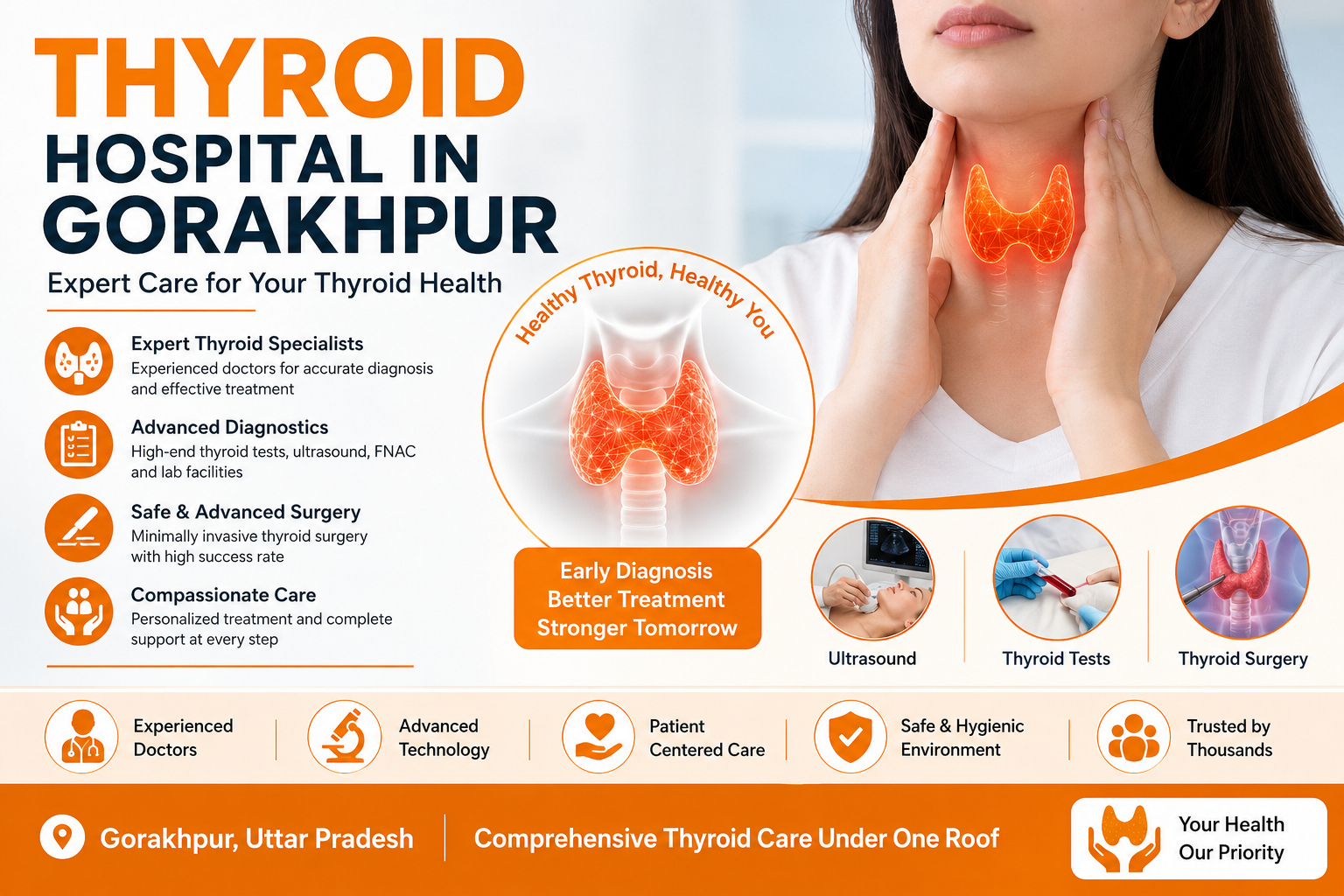
The thyroid is a small butterfly-shaped gland located at the front of the neck, but it plays a vital role in regulating your body’s metabolism, energy production, heart rate, body temperature, and hormonal balance. When the thyroid gland does not function properly, it can affect nearly every organ in the body.
If you are searching for the best thyroid hospital in Gorakhpur, it is important to understand thyroid diseases, their symptoms, available treatment options, and when surgery becomes necessary. Hospitals offering thyroid care typically provide comprehensive evaluation, advanced diagnostic facilities, medical management, and surgical treatment for thyroid disorders.
What is the Thyroid Gland?
The thyroid gland is an endocrine gland located below the Adam’s apple. It produces two major hormones:
- Triiodothyronine (T3)
- Thyroxine (T4)
These hormones regulate:
- Metabolism
- Body temperature
- Heart rate
- Brain development
- Digestion
- Muscle function
- Menstrual cycle
- Growth in children
The thyroid is controlled by Thyroid Stimulating Hormone (TSH), which is released by the pituitary gland.
Common Thyroid Disorders
1. Hypothyroidism (Underactive Thyroid)
Hypothyroidism occurs when the thyroid produces insufficient hormones.
Causes
- Hashimoto’s thyroiditis
- Iodine deficiency
- Thyroid surgery
- Radiation therapy
- Certain medications
- Congenital thyroid disorders
Symptoms
- Constant fatigue
- Weight gain
- Dry skin
- Hair fall
- Depression
- Slow heartbeat
- Constipation
- Puffy face
- Cold intolerance
- Memory problems
Women are affected more frequently than men.
2. Hyperthyroidism (Overactive Thyroid)
Hyperthyroidism occurs when excessive thyroid hormones are produced.
Causes
- Graves’ disease
- Toxic multinodular goiter
- Thyroid nodules
- Thyroiditis
Symptoms
- Sudden weight loss
- Fast heartbeat
- Anxiety
- Tremors
- Excessive sweating
- Heat intolerance
- Frequent bowel movements
- Difficulty sleeping
- Eye problems (Graves’ disease)
3. Goiter
A goiter is an enlargement of the thyroid gland.
It may occur due to:
- Iodine deficiency
- Hypothyroidism
- Hyperthyroidism
- Thyroid nodules
- Autoimmune diseases
Symptoms include:
- Neck swelling
- Difficulty swallowing
- Difficulty breathing
- Hoarseness of voice
4. Thyroid Nodules
Thyroid nodules are lumps within the thyroid gland.
Most nodules are benign, but some require evaluation to rule out cancer.
Symptoms may include:
- Visible neck lump
- Difficulty swallowing
- Voice changes
- Neck discomfort
5. Thyroid Cancer
Thyroid cancer is highly treatable when diagnosed early.
Common types include:
- Papillary thyroid cancer
- Follicular thyroid cancer
- Medullary thyroid cancer
- Anaplastic thyroid cancer
Warning signs include:
- Neck swelling
- Enlarged lymph nodes
- Persistent hoarseness
- Difficulty swallowing
- Difficulty breathing
Risk Factors
You may have a higher risk if you:
- Are female
- Are over 35 years of age
- Have a family history
- Have autoimmune disease
- Have iodine deficiency
- Have undergone radiation exposure
- Are pregnant or recently delivered a baby
Symptoms That Require Medical Attention
Consult a thyroid specialist if you experience:
- Unexplained weight changes
- Persistent tiredness
- Neck swelling
- Hair loss
- Mood changes
- Fast or slow heartbeat
- Difficulty swallowing
- Hoarseness lasting more than two weeks
- Irregular menstrual cycles
Diagnosis of Thyroid Disorders
A thyroid hospital usually offers comprehensive investigations.
Blood Tests
- TSH
- Free T3
- Free T4
- Anti-TPO Antibodies
- Thyroglobulin
These tests help determine thyroid function.
Ultrasound of Thyroid
Ultrasound helps evaluate:
- Thyroid size
- Nodules
- Cysts
- Blood supply
- Suspicious features
Fine Needle Aspiration Cytology (FNAC)
FNAC is recommended when nodules appear suspicious.
It helps determine whether the lump is:
- Benign
- Suspicious
- Malignant
CT Scan or MRI
Advanced imaging may be needed for:
- Large goiters
- Cancer spread
- Deep neck swelling
Thyroid Scan
Radioactive iodine scanning helps assess thyroid activity in selected patients.
Treatment Options
Treatment depends on the type and severity of thyroid disease.
Medical Treatment
Hypothyroidism is treated with thyroid hormone replacement medication.
The dose is adjusted based on regular TSH monitoring.
Patients should take medication on an empty stomach at the same time each day for the best results.
Treatment for Hyperthyroidism
Treatment may include:
- Anti-thyroid medicines
- Beta-blockers
- Radioactive iodine therapy
- Surgery in selected cases
Thyroid Surgery
Surgery may be recommended for:
- Large goiter
- Thyroid cancer
- Suspicious nodules
- Recurrent thyroid cysts
- Hyperthyroidism not responding to medicines
- Compression symptoms affecting breathing or swallowing
Modern thyroid surgery focuses on preserving important structures such as the recurrent laryngeal nerve and parathyroid glands while safely removing diseased thyroid tissue.
Types of Thyroid Surgery
Hemithyroidectomy
Removal of one thyroid lobe.
Suitable for:
- Single nodule
- Small tumors
- Diagnostic purposes
Total Thyroidectomy
Entire thyroid gland is removed.
Recommended for:
- Thyroid cancer
- Large bilateral goiter
- Graves’ disease
- Multiple nodules
Completion Thyroidectomy
Removal of remaining thyroid tissue after previous partial surgery.
Recovery After Surgery
Most patients:
- Walk within a few hours
- Resume eating on the same day
- Stay in the hospital for 1–2 days
- Return to normal activities within 1–2 weeks
Recovery varies depending on the extent of surgery and overall health.
Possible Complications
Although uncommon with experienced surgeons, complications may include:
- Temporary voice changes
- Bleeding
- Infection
- Low calcium levels
- Scar formation
Choosing an experienced surgical team helps minimize these risks.
Thyroid Disorders During Pregnancy
Pregnant women require special attention because thyroid hormones are essential for fetal brain development.
Untreated thyroid disease may increase the risk of:
- Miscarriage
- Premature delivery
- High blood pressure
- Low birth weight
- Developmental issues in the baby
Regular monitoring and appropriate medication adjustments are important during pregnancy.
Thyroid Disease in Children
Children may develop:
- Congenital hypothyroidism
- Autoimmune thyroid disease
- Thyroid nodules
Symptoms include:
- Poor growth
- Delayed development
- Learning difficulties
- Fatigue
- Neck swelling
Early diagnosis is crucial to support normal growth and brain development.
Diet for Thyroid Patients
A balanced diet supports thyroid health.
Include:
- Iodized salt
- Milk
- Eggs
- Fish
- Nuts
- Fruits
- Vegetables
- Whole grains
- Lean protein
Limit:
- Highly processed foods
- Excess sugar
- Excessive soy intake (especially around medication time)
- Smoking and alcohol
Discuss any supplements with your healthcare provider, as they may interfere with thyroid medication.
Lifestyle Tips
Maintain healthy thyroid function by:
- Exercising regularly
- Getting adequate sleep
- Managing stress
- Taking medicines consistently
- Following up with your doctor
- Monitoring thyroid levels as advised
When Should You Visit a Thyroid Hospital?
Seek medical evaluation if you notice:
- Neck swelling
- Persistent fatigue
- Unexplained weight gain or loss
- Voice changes
- Difficulty swallowing
- Difficulty breathing
- Abnormal thyroid blood test results
- Family history of thyroid cancer
Thyroid Care in Gorakhpur
Gorakhpur has hospitals and specialists that evaluate and manage thyroid disorders through laboratory testing, ultrasound, FNAC, medication, and thyroid surgery when required. Some tertiary ENT departments also manage thyroid gland diseases alongside head and neck surgery services.
Frequently Asked Questions (FAQs)
Can thyroid disease be cured?
Many thyroid disorders can be effectively controlled with medication, while some conditions, such as certain thyroid cancers or large goiters, may require surgery.
Is thyroid surgery safe?
Yes. Thyroid surgery is generally safe when performed by experienced surgeons using modern surgical techniques.
Can thyroid nodules become cancer?
Most thyroid nodules are benign, but a small percentage may be cancerous. Proper evaluation with ultrasound and FNAC is essential.
How often should thyroid tests be repeated?
The frequency depends on your condition. Your doctor may recommend testing every few months after starting treatment and less frequently once levels are stable.
Can thyroid patients live a normal life?
Yes. With early diagnosis, regular follow-up, appropriate medication, and a healthy lifestyle, most people with thyroid disorders lead normal, active lives.
Conclusion
Thyroid disorders are common but highly manageable with timely diagnosis and appropriate treatment. Whether you have hypothyroidism, hyperthyroidism, thyroid nodules, goiter, or thyroid cancer, seeking care at a qualified thyroid hospital in Gorakhpur can help ensure accurate diagnosis, individualized treatment, and long-term follow-up. Regular monitoring, adherence to medication, healthy lifestyle habits, and specialist consultation are key to maintaining optimal thyroid health and preventing complications. Early medical attention remains the best way to achieve successful outcomes and improve quality of life.
