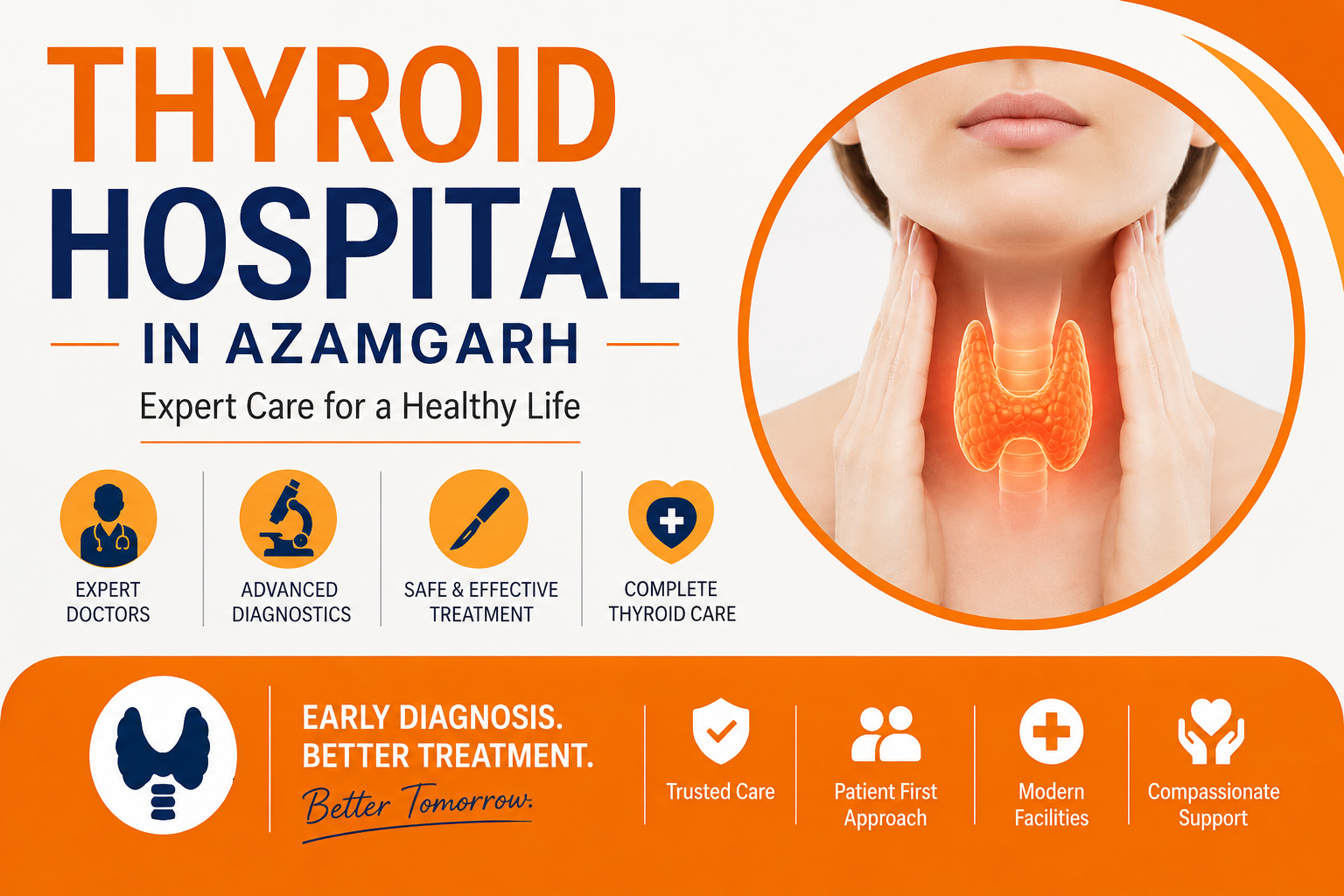
Thyroid disorders are among the most common hormonal conditions affecting millions of people worldwide. Despite being a small butterfly-shaped gland located in the front of the neck, the thyroid plays a vital role in regulating metabolism, body temperature, heart rate, energy levels, growth, and hormonal balance.
If you are searching for the best thyroid hospital in Azamgarh, it is essential to understand thyroid diseases, their symptoms, causes, diagnosis, treatment options, and when surgery becomes necessary. Choosing an experienced hospital with modern diagnostic facilities and skilled specialists ensures accurate diagnosis and effective treatment.
This comprehensive guide explains everything you need to know about thyroid disorders and how specialized thyroid care can improve your quality of life.
What is the Thyroid Gland?
The thyroid is a butterfly-shaped endocrine gland situated just below the Adam’s apple. It produces two important hormones:
- Thyroxine (T4)
- Triiodothyronine (T3)
These hormones regulate:
- Metabolism
- Body temperature
- Heart function
- Brain development
- Muscle strength
- Digestion
- Energy production
- Weight control
The pituitary gland controls thyroid hormone production by releasing Thyroid Stimulating Hormone (TSH).
Even a small imbalance in thyroid hormone production can affect almost every organ in the body.
Common Thyroid Disorders
1. Hypothyroidism (Underactive Thyroid)
Hypothyroidism occurs when the thyroid gland produces insufficient hormones.
Common Symptoms
- Constant tiredness
- Weight gain
- Dry skin
- Hair fall
- Depression
- Constipation
- Cold intolerance
- Puffy face
- Slow heartbeat
- Irregular menstrual cycles
- Difficulty concentrating
Causes
- Hashimoto’s thyroiditis
- Iodine deficiency
- Previous thyroid surgery
- Radiation therapy
- Certain medications
- Congenital thyroid disorders
2. Hyperthyroidism (Overactive Thyroid)
Hyperthyroidism occurs when the thyroid gland produces excessive hormones.
Symptoms
- Rapid heartbeat
- Weight loss despite normal eating
- Anxiety
- Excessive sweating
- Heat intolerance
- Tremors
- Nervousness
- Sleep disturbances
- Frequent bowel movements
- Muscle weakness
Common Causes
- Graves’ disease
- Toxic thyroid nodules
- Thyroiditis
- Excess iodine intake
3. Goiter
A goiter refers to enlargement of the thyroid gland.
It may occur with:
- Normal thyroid function
- Hyperthyroidism
- Hypothyroidism
Symptoms
- Neck swelling
- Difficulty swallowing
- Tightness in the neck
- Hoarseness
- Breathing difficulty in severe cases
4. Thyroid Nodules
Thyroid nodules are abnormal lumps within the thyroid gland.
Most nodules are benign, but some require evaluation to rule out cancer.
Symptoms may include:
- Visible neck lump
- Difficulty swallowing
- Voice changes
- Neck discomfort
5. Thyroid Cancer
Although relatively uncommon, thyroid cancer is highly treatable when diagnosed early.
Common types include:
- Papillary thyroid cancer
- Follicular thyroid cancer
- Medullary thyroid cancer
- Anaplastic thyroid cancer
Warning Signs
- Persistent neck lump
- Enlarged lymph nodes
- Hoarseness
- Difficulty swallowing
- Persistent throat discomfort
Early diagnosis significantly improves treatment outcomes.
Risk Factors for Thyroid Disease
Several factors increase the likelihood of developing thyroid disorders:
- Family history
- Female gender
- Pregnancy
- Autoimmune diseases
- Diabetes
- Iodine deficiency
- Previous neck radiation
- Increasing age
- Smoking
- Certain medications
When Should You Visit a Thyroid Specialist?
Consult a thyroid specialist if you experience:
- Persistent fatigue
- Sudden weight changes
- Neck swelling
- Hair loss
- Depression
- Anxiety
- Irregular heartbeat
- Difficulty swallowing
- Voice changes
- Menstrual irregularities
- Infertility
- Heat or cold intolerance
Ignoring thyroid symptoms may lead to serious long-term complications.
Diagnosis of Thyroid Disorders
A modern thyroid hospital uses advanced diagnostic methods to identify the exact cause of thyroid disease.
Blood Tests
Common thyroid tests include:
- TSH
- Free T3
- Free T4
- Thyroid antibodies
- Calcitonin (when indicated)
Ultrasound
Ultrasound helps evaluate:
- Thyroid size
- Nodules
- Cysts
- Blood supply
- Suspicious growths
Fine Needle Aspiration Cytology (FNAC)
FNAC involves collecting cells from a thyroid nodule using a thin needle.
This helps determine whether a nodule is benign or cancerous.
Thyroid Scan
A thyroid scan evaluates gland function using radioactive tracers in selected cases.
CT or MRI Scan
Advanced imaging may be recommended when large thyroid masses extend into the chest or compress nearby structures.
Treatment Options
Treatment depends upon the type and severity of the thyroid disorder.
Medication
Hypothyroidism is usually managed with lifelong thyroid hormone replacement.
Hyperthyroidism may be treated using medicines that reduce hormone production.
Regular follow-up is necessary to adjust medication doses.
Radioactive Iodine Therapy
This treatment is often recommended for selected patients with hyperthyroidism.
It works by destroying overactive thyroid tissue while preserving surrounding structures.
Thyroid Surgery
Surgery may be required if the patient has:
- Large goiter
- Thyroid cancer
- Suspicious nodules
- Compression symptoms
- Recurrent cysts
- Hyperthyroidism not controlled by medication
Types of Thyroid Surgery
Hemithyroidectomy
Only one thyroid lobe is removed.
Usually recommended for:
- Solitary nodules
- Small tumors
Total Thyroidectomy
The complete thyroid gland is removed.
Recommended for:
- Thyroid cancer
- Large multinodular goiter
- Bilateral disease
Near Total Thyroidectomy
Most of the thyroid gland is removed while preserving important nearby structures when appropriate.
Modern Thyroid Surgery
Advanced hospitals now perform thyroid surgery using:
- High-definition imaging
- Nerve monitoring
- Advanced energy devices
- Better bleeding control
- Smaller incisions
- Faster recovery
Some specialized centers also offer minimally invasive approaches for selected patients. Recent advances in thyroid surgery continue to improve cosmetic outcomes and recovery.
Recovery After Thyroid Surgery
Most patients recover well with proper postoperative care.
Recovery generally includes:
- Early mobilization
- Pain management
- Calcium monitoring
- Voice assessment
- Regular follow-up
Patients can usually resume routine activities within a few weeks, depending on the procedure performed.
Possible Complications
Although thyroid surgery is generally safe in experienced hands, potential risks include:
- Bleeding
- Infection
- Temporary voice changes
- Low calcium levels
- Scar formation
- Rare nerve injury
These risks are minimized when surgery is performed by experienced thyroid surgeons.
Living with Thyroid Disease
Most thyroid conditions can be managed successfully with:
- Regular medication
- Healthy lifestyle
- Periodic blood tests
- Balanced nutrition
- Routine medical follow-up
Many patients live completely normal and healthy lives after proper treatment.
Diet for Thyroid Patients
A healthy diet supports overall thyroid health.
Foods to Include
- Fruits
- Vegetables
- Whole grains
- Lean protein
- Eggs
- Dairy products
- Nuts
- Seeds
- Fish
- Adequate iodine (as advised)
Foods to Limit
- Highly processed foods
- Excess sugar
- Excessive soy products (if advised)
- Excess iodine supplements without medical guidance
Patients should always discuss dietary changes with their healthcare provider.
Thyroid Disorders During Pregnancy
Thyroid problems can affect both mother and baby.
Untreated thyroid disease may increase the risk of:
- Miscarriage
- Premature delivery
- High blood pressure
- Poor fetal growth
Routine thyroid screening is recommended for women with symptoms or risk factors during pregnancy.
Can Thyroid Disease Be Prevented?
Not all thyroid diseases can be prevented, but you can reduce risk by:
- Eating a balanced diet
- Using iodized salt appropriately
- Avoiding smoking
- Managing autoimmune diseases
- Getting regular health checkups
- Seeking medical advice if symptoms appear
Why Early Diagnosis Matters
Early diagnosis offers many advantages:
- Better symptom control
- Fewer complications
- Reduced need for surgery
- Lower healthcare costs
- Improved quality of life
- Better long-term outcomes
Choosing the Best Thyroid Hospital in Azamgarh
When selecting a thyroid hospital, look for:
- Experienced thyroid specialists
- Comprehensive diagnostic facilities
- High-quality ultrasound services
- FNAC availability
- Modern operation theatres
- Multidisciplinary care
- Personalized treatment plans
- Experienced surgical team
- Postoperative follow-up
- Patient-focused care
Azamgarh has access to government healthcare facilities, including the District Hospital and Government Medical College, along with several private hospitals that provide thyroid evaluation and treatment services.
Why Regular Follow-Up is Important
Even after successful treatment, patients should continue regular follow-up appointments.
Monitoring may include:
- TSH testing
- Thyroid hormone levels
- Ultrasound (when required)
- Medication adjustments
- Long-term symptom assessment
Consistent follow-up helps maintain optimal thyroid function and detect any recurrence or complications early.
Frequently Asked Questions (FAQs)
Can thyroid disease be cured?
Many thyroid disorders can be effectively managed, while some require lifelong medication or monitoring.
Is thyroid surgery painful?
Modern surgical techniques and anesthesia make thyroid surgery generally safe, with postoperative discomfort that is usually manageable.
Is every thyroid nodule cancer?
No. Most thyroid nodules are benign, but they should be properly evaluated with ultrasound and, when indicated, FNAC.
Can thyroid disease cause weight gain?
Yes. Hypothyroidism commonly causes weight gain due to a slower metabolism.
Can thyroid disease affect fertility?
Yes. Untreated thyroid disorders may interfere with ovulation and fertility in both women and men.
Conclusion
Thyroid disorders are common but highly treatable when diagnosed early. Whether you are experiencing fatigue, unexplained weight changes, neck swelling, or hormonal imbalance, timely consultation with a qualified thyroid specialist is essential.
A reputable thyroid hospital in Azamgarh should provide comprehensive care, including accurate diagnosis, laboratory testing, ultrasound evaluation, medical management, and advanced thyroid surgery when needed. With early detection, personalized treatment, and regular follow-up, most patients can lead healthy, active, and productive lives.
