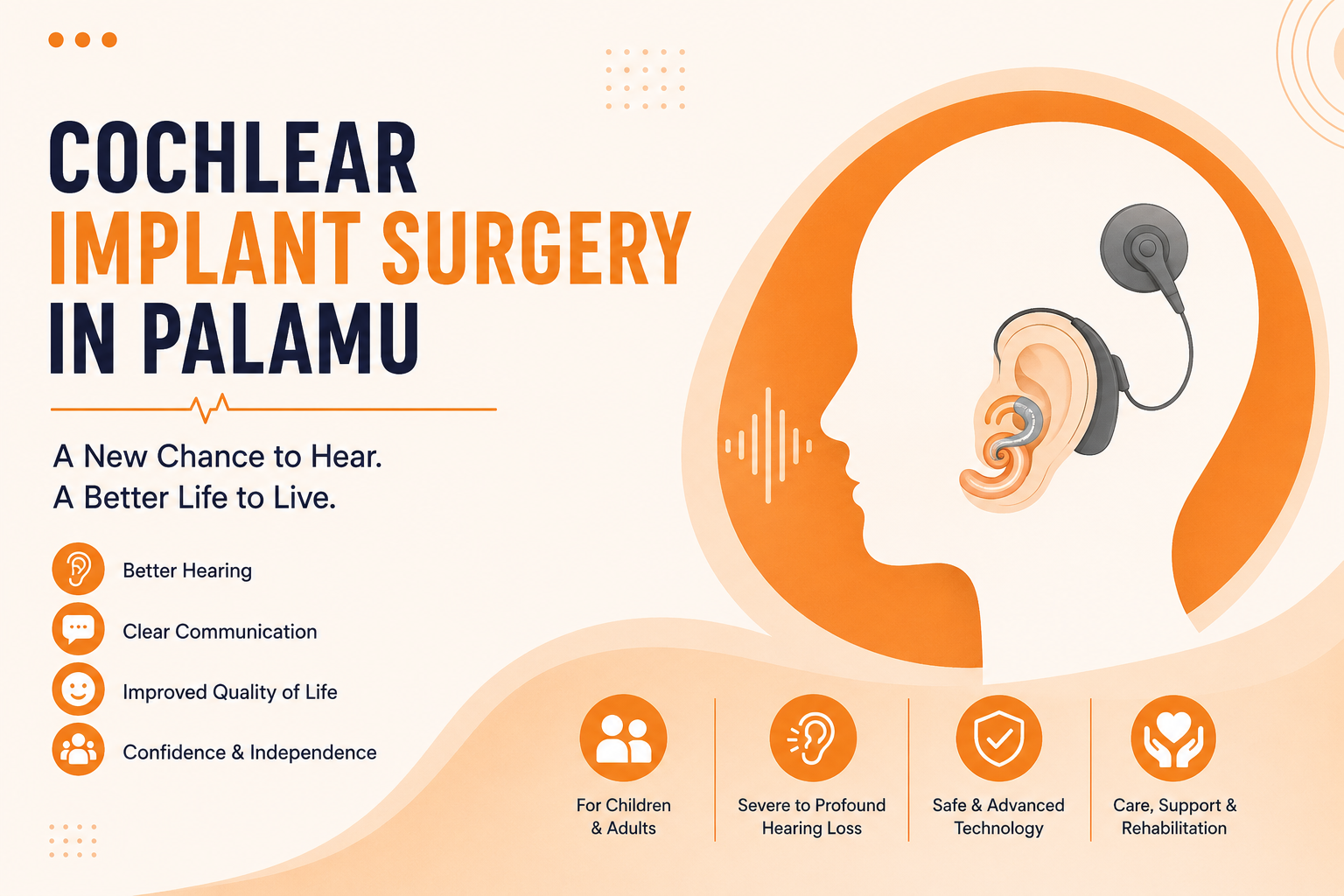
Hearing is one of the most important senses that allows us to communicate, learn, work, and enjoy life. When hearing loss becomes severe or profound, conventional hearing aids may no longer provide sufficient benefit. In such cases, cochlear implant surgery can offer a life-changing solution.
If you are looking for cochlear implant surgery in Palamu, this comprehensive guide explains everything you need to know—from understanding hearing loss and candidacy to surgery, recovery, costs, benefits, government schemes, and choosing the right cochlear implant center.
Whether you are a parent of a child with hearing loss or an adult struggling to hear conversations, this article will help you make an informed decision.
What is a Cochlear Implant?
A cochlear implant is an advanced electronic medical device designed for people with severe to profound sensorineural hearing loss who receive little or no benefit from hearing aids.
Unlike hearing aids, which amplify sounds, a cochlear implant bypasses the damaged inner ear (cochlea) and directly stimulates the auditory nerve, allowing the brain to perceive sound.
A cochlear implant has two parts:
External Components
- Speech Processor
- Microphone
- Transmitter Coil
Internal Components
- Receiver-Stimulator
- Electrode Array inserted inside the cochlea
Together, these components convert sound into electrical signals that stimulate the hearing nerve.
How Does a Cochlear Implant Work?
The hearing process involves several steps:
- The microphone captures sounds.
- The speech processor converts sound into digital signals.
- The transmitter sends signals to the internal implant.
- The implanted receiver converts them into electrical impulses.
- The electrode array stimulates the auditory nerve.
- The brain interprets these signals as meaningful sounds.
Although the hearing experience differs from natural hearing initially, the brain gradually adapts with rehabilitation.
What Causes Severe Hearing Loss?
People in Palamu and nearby regions may develop severe hearing loss due to several reasons:
Congenital Hearing Loss
Some babies are born with hearing impairment because of:
- Genetic conditions
- Infections during pregnancy
- Premature birth
- Birth complications
Childhood Infections
Diseases like:
- Meningitis
- Measles
- Mumps
- Rubella
can permanently damage hearing.
Age-Related Hearing Loss
As people grow older, inner ear cells naturally deteriorate.
Excessive Noise Exposure
Long-term exposure to loud sounds from:
- Industrial work
- Mining
- Loud music
- Firecrackers
can damage hearing permanently.
Ear Trauma
Head injuries or accidents may affect hearing.
Ototoxic Medicines
Certain antibiotics and chemotherapy drugs can harm the inner ear.
What is Sensorineural Hearing Loss?
Sensorineural hearing loss occurs when:
- Hair cells inside the cochlea are damaged
- Auditory nerve function is affected
This type of hearing loss cannot usually be corrected with medicines or surgery on the ear itself.
A cochlear implant is often the best treatment option for severe cases.
Who Needs Cochlear Implant Surgery?
You may be a suitable candidate if:
- Severe to profound hearing loss
- Hearing aids provide limited benefit
- Difficulty understanding speech
- Unable to communicate effectively
- Hearing loss in one or both ears
- Healthy enough for surgery
Children Who May Need Cochlear Implants
Children with:
- Congenital deafness
- Delayed speech development
- Failed newborn hearing screening
- Poor response to hearing aids
Early implantation offers the best outcomes.
Adults Who May Benefit
Adults who:
- Lost hearing later in life
- Have progressive hearing loss
- Cannot understand conversations despite hearing aids
often experience significant improvement.
Symptoms That Suggest You Should Consult an ENT Specialist
Consider an evaluation if you experience:
- Difficulty hearing conversations
- Frequently asking people to repeat themselves
- Increasing TV volume
- Difficulty talking on the phone
- Ringing in the ears (tinnitus)
- Poor speech clarity
- Missing alarms or doorbells
Evaluation Before Cochlear Implant Surgery
A comprehensive evaluation includes:
ENT Examination
The ENT surgeon examines the ears and reviews medical history.
Hearing Tests
These may include:
- Pure Tone Audiometry (PTA)
- Speech Audiometry
- Tympanometry
- OAE
- BERA/ABR
Imaging Tests
Doctors may recommend:
- CT Scan
- MRI
to assess the inner ear anatomy.
Speech and Language Evaluation
Particularly important for children.
Psychological Assessment
This ensures realistic expectations and readiness for rehabilitation.
Best Age for Cochlear Implant Surgery
Although implants can be performed at almost any age, earlier is generally better.
Children
Implantation before 2 years of age often produces excellent speech and language outcomes because the developing brain is highly adaptable.
Adults
There is no strict upper age limit. Healthy adults and older individuals can also benefit if they meet the medical criteria.
Cochlear Implant Surgery Procedure
The procedure typically takes 2–4 hours under general anesthesia.
Step 1
A small incision is made behind the ear.
Step 2
The surgeon accesses the cochlea.
Step 3
The electrode array is inserted carefully into the cochlea.
Step 4
The receiver-stimulator is secured beneath the skin.
Step 5
The incision is closed with sutures.
Most patients stay in the hospital for 1–2 days.
Is Cochlear Implant Surgery Safe?
Yes.
It is considered a safe and well-established procedure performed worldwide.
Like any surgery, there are small risks including:
- Infection
- Bleeding
- Temporary dizziness
- Facial nerve injury (rare)
- Device malfunction (rare)
- Meningitis (very uncommon; vaccination is recommended)
Choosing an experienced cochlear implant team significantly reduces these risks.
Recovery After Surgery
Recovery is generally smooth.
First Week
- Mild discomfort
- Swelling around the ear
- Rest advised
2–4 Weeks
The surgical wound heals.
Device Activation
The implant is activated about 3–4 weeks after surgery, once healing is complete.
What Happens During Device Activation?
The audiologist:
- Connects the speech processor.
- Programs the implant (“mapping”).
- Adjusts sound levels.
- Begins hearing rehabilitation.
Patients often hear sounds immediately, but speech understanding improves gradually with practice.
Importance of Speech Therapy
Speech therapy is essential after implantation.
It helps patients:
- Recognize sounds
- Understand speech
- Improve pronunciation
- Develop language skills
- Build confidence in communication
Children typically require regular therapy sessions for several months or longer, depending on their age and hearing history.
Benefits of Cochlear Implant Surgery
Most patients experience:
- Improved speech understanding
- Better communication
- Enhanced quality of life
- Increased independence
- Better educational opportunities for children
- Improved workplace performance
- Greater social participation
- Improved safety by hearing alarms and traffic sounds
Cochlear Implant vs Hearing Aid
| Feature | Hearing Aid | Cochlear Implant |
|---|---|---|
| Works by | Amplifying sound | Stimulating the auditory nerve |
| Best for | Mild to severe hearing loss | Severe to profound hearing loss |
| Surgery Needed | No | Yes |
| Speech Clarity | Limited in profound loss | Significantly improved for suitable candidates |
| Technology | External only | Internal + external device |
Cochlear Implant Surgery Cost in Palamu
The cost depends on:
- Implant brand
- Hospital infrastructure
- Surgeon’s expertise
- Rehabilitation services
- Follow-up programming
- Speech therapy requirements
Although cochlear implantation is a significant investment, many patients can receive financial support through eligible government health schemes, insurance, or charitable programs. It is best to consult the implant center to understand current eligibility and available assistance.
Government Schemes and Financial Assistance
Eligible patients may benefit from:
- Ayushman Bharat (PM-JAY) (where applicable and as per empanelment)
- State government health schemes
- Assistance through social welfare programs
- Charitable trusts and NGOs
- Corporate Social Responsibility (CSR) initiatives
Availability depends on eligibility criteria, hospital empanelment, and current government policies.
Why Early Cochlear Implantation Matters
Delaying implantation can affect:
- Speech development
- Language learning
- Academic performance
- Social interaction
- Cognitive development
Children implanted early generally achieve better listening and communication outcomes than those implanted later.
Choosing the Right Cochlear Implant Center Near Palamu
When selecting a cochlear implant hospital, consider:
- Experienced ENT and cochlear implant surgeons
- Dedicated audiology department
- Speech-language therapists
- Modern diagnostic facilities
- Advanced operating rooms
- Comprehensive rehabilitation services
- Pediatric cochlear implant expertise
- Long-term follow-up and mapping support
A multidisciplinary team is essential for successful outcomes.
Life After Cochlear Implant Surgery
Most recipients return to normal daily activities after recovery.
With regular follow-up, mapping sessions, and rehabilitation, many patients can:
- Attend school confidently
- Communicate with family and friends
- Use telephones and video calls
- Enjoy music and entertainment
- Participate in professional life
- Lead an active and independent lifestyle
Progress varies from person to person, but consistent practice and support greatly enhance results.
Frequently Asked Questions (FAQs)
Is cochlear implant surgery painful?
The procedure is performed under general anesthesia, so patients do not feel pain during surgery. Mild discomfort after surgery is usually manageable with medication.
How long does the surgery take?
It generally takes 2–4 hours.
How many days of hospitalization are required?
Most patients stay in the hospital for 1–2 days, depending on recovery.
Can both ears receive cochlear implants?
Yes. Depending on the patient’s condition and the treating team’s recommendation, one or both ears may be implanted.
Will hearing become normal immediately?
No. Hearing improves gradually after activation and rehabilitation. The brain needs time to adapt to the new way of receiving sound.
Is speech therapy necessary?
Yes. Rehabilitation, including speech and auditory training, is a key part of achieving the best results.
Can adults benefit from cochlear implants?
Yes. Adults with severe to profound hearing loss who gain limited benefit from hearing aids can experience significant improvements in communication.
Why Patients from Palamu Seek Advanced Cochlear Implant Care
Many patients from Palamu choose specialized ENT and cochlear implant centers because they offer:
- Experienced cochlear implant surgeons
- Comprehensive hearing evaluations
- Modern surgical infrastructure
- Advanced diagnostic imaging
- Dedicated audiologists
- Speech and language rehabilitation
- Long-term follow-up and device programming
- Multidisciplinary care under one roof
Conclusion
Severe hearing loss can affect every aspect of life, but it does not have to be permanent. Cochlear implant surgery has transformed the lives of thousands of children and adults by restoring access to sound, improving communication, and enhancing quality of life.
If you or your loved one in Palamu has severe to profound hearing loss and hearing aids are no longer effective, a comprehensive evaluation by an experienced ENT specialist and cochlear implant team is the next step. Early diagnosis, timely implantation, and dedicated rehabilitation can make a remarkable difference—helping patients reconnect with conversations, education, work, and the world around them.
