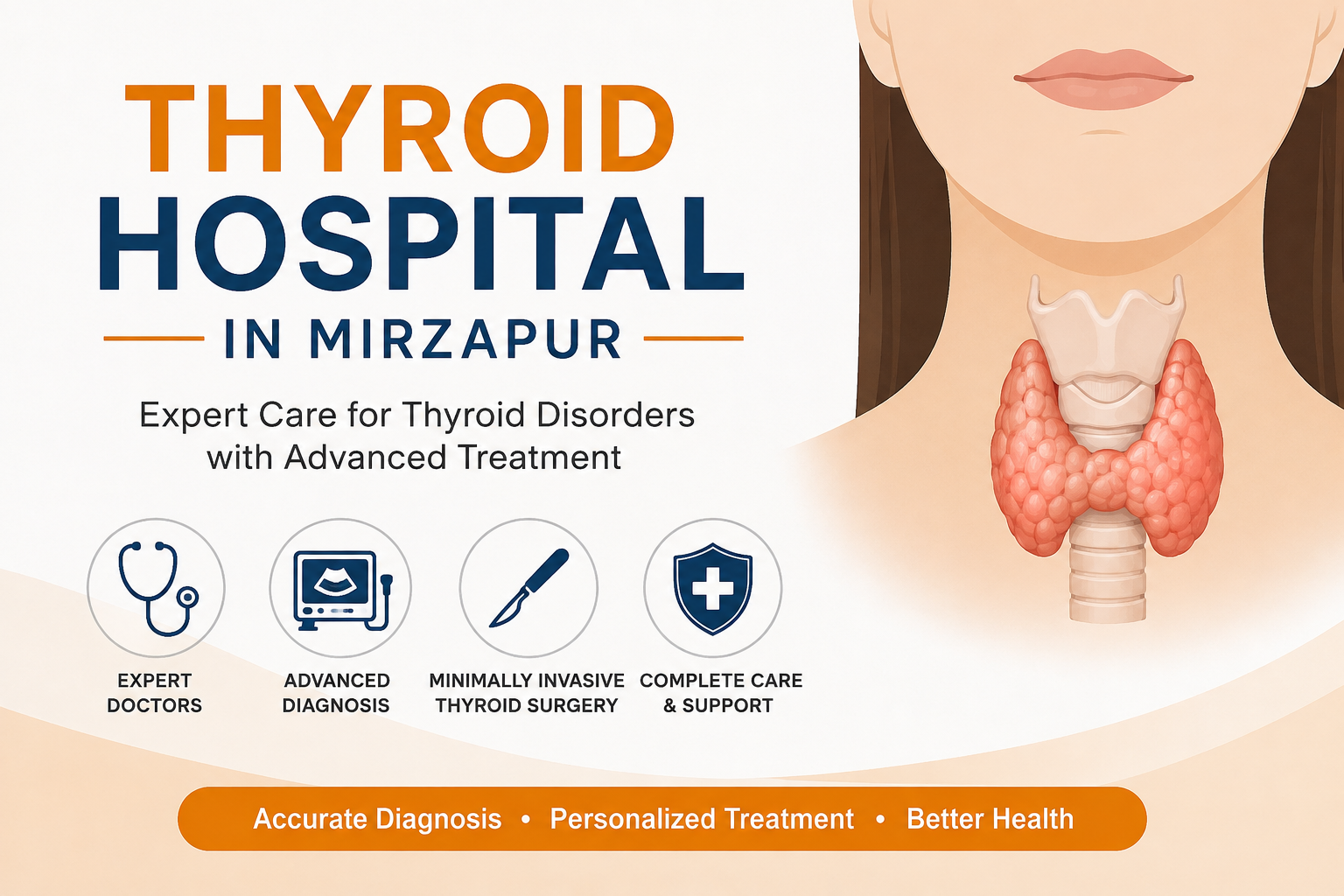
If you are looking for the best thyroid hospital in Mirzapur, choosing a hospital with experienced thyroid specialists, advanced diagnostic facilities, and comprehensive treatment options is essential. Thyroid disorders are among the most common hormonal diseases affecting people of all age groups, especially women. Early diagnosis and timely treatment can help prevent serious complications and improve your overall quality of life.
A specialized thyroid hospital provides complete care, including consultation, blood investigations, ultrasound, medication management, minimally invasive procedures, and thyroid surgery whenever required. Modern healthcare facilities also focus on long-term follow-up, ensuring that thyroid hormone levels remain balanced after treatment.
Whether you are experiencing unexplained weight gain, constant fatigue, neck swelling, hair loss, irregular heartbeat, or difficulty swallowing, consulting a thyroid specialist at the earliest can help identify the underlying condition and begin effective treatment. Thyroid disorders are generally manageable with appropriate diagnosis and personalized care.
What is the Thyroid Gland?
The thyroid is a small butterfly-shaped endocrine gland located at the front of the neck. Although small in size, it plays a major role in regulating the body’s metabolism.
The thyroid produces two important hormones:
- T3 (Triiodothyronine)
- T4 (Thyroxine)
These hormones help regulate:
- Body metabolism
- Energy production
- Heart rate
- Body temperature
- Brain development
- Digestion
- Muscle strength
- Menstrual cycle
- Growth in children
The pituitary gland controls thyroid hormone production by releasing Thyroid Stimulating Hormone (TSH). Any imbalance in this system can lead to thyroid disorders.
Common Thyroid Disorders
A thyroid hospital near Mirzapur treats several thyroid-related diseases.
1. Hypothyroidism
Hypothyroidism occurs when the thyroid gland produces insufficient hormones.
It is one of the most common thyroid disorders worldwide.
Symptoms
- Weight gain
- Fatigue
- Constipation
- Dry skin
- Hair loss
- Depression
- Slow heartbeat
- Puffy face
- Memory problems
- Feeling cold frequently
- Heavy menstrual periods
Causes
- Hashimoto’s thyroiditis
- Iodine deficiency
- Thyroid surgery
- Radiation therapy
- Certain medications
2. Hyperthyroidism
Hyperthyroidism occurs when the thyroid becomes overactive and produces excessive hormones.
Symptoms
- Weight loss
- Rapid heartbeat
- Excessive sweating
- Tremors
- Anxiety
- Irritability
- Heat intolerance
- Increased appetite
- Frequent bowel movements
- Difficulty sleeping
Causes
- Graves’ disease
- Toxic multinodular goiter
- Thyroid nodules
- Excess iodine intake
3. Goiter
A goiter is an abnormal enlargement of the thyroid gland.
It may occur due to:
- Iodine deficiency
- Autoimmune disease
- Thyroid nodules
- Hormonal imbalance
Large goiters may cause:
- Neck swelling
- Difficulty swallowing
- Difficulty breathing
- Hoarseness
4. Thyroid Nodules
Thyroid nodules are abnormal lumps within the thyroid gland.
Most nodules are benign, but some require further evaluation to rule out thyroid cancer.
5. Thyroid Cancer
Although relatively uncommon, thyroid cancer is highly treatable when diagnosed early.
Symptoms include:
- Persistent neck lump
- Hoarseness
- Difficulty swallowing
- Neck pain
- Enlarged lymph nodes
6. Thyroiditis
Inflammation of the thyroid gland caused by:
- Viral infection
- Autoimmune disease
- Postpartum hormonal changes
- Certain medications
Symptoms That Should Never Be Ignored
Visit a thyroid specialist if you experience:
- Constant tiredness
- Sudden weight gain
- Sudden weight loss
- Hair thinning
- Neck swelling
- Hoarse voice
- Difficulty swallowing
- Fast heartbeat
- Slow heartbeat
- Mood changes
- Anxiety
- Depression
- Cold intolerance
- Heat intolerance
- Dry skin
- Puffy face
- Irregular menstrual cycles
- Fertility issues
Persistent symptoms should be evaluated with thyroid function tests and imaging where appropriate.
Risk Factors for Thyroid Disease
You may have a higher risk if you have:
- Family history of thyroid disease
- Female gender
- Age above 35 years
- Diabetes
- Autoimmune diseases
- Pregnancy
- Menopause
- Previous thyroid surgery
- Radiation exposure
- Iodine deficiency
- Obesity
Women are significantly more likely than men to develop thyroid disorders.
Diagnosis of Thyroid Disorders
A thyroid hospital typically offers comprehensive diagnostic services.
Blood Tests
- TSH
- Free T3
- Free T4
- Thyroid antibodies
- Calcitonin (when indicated)
Imaging
- Thyroid Ultrasound
- Doppler Study
Advanced Investigations
- Fine Needle Aspiration Cytology (FNAC)
- Thyroid Scan
- CT Scan (selected cases)
- MRI (rare cases)
Early diagnosis helps determine the appropriate treatment plan.
Thyroid Treatment Options
Treatment depends on the type and severity of the thyroid disorder.
Medication
Patients with hypothyroidism usually require thyroid hormone replacement therapy, while hyperthyroidism may be managed with anti-thyroid medicines and medications to control symptoms. Regular follow-up and blood tests are essential for dose adjustments.
Radioactive Iodine Therapy
Radioactive iodine is used in selected patients with hyperthyroidism and certain thyroid cancers to destroy overactive thyroid tissue.
Thyroid Surgery
Surgery may be recommended for:
- Large goiter
- Thyroid cancer
- Suspicious nodules
- Hyperthyroidism not responding to medication
- Compressive neck swelling
Common procedures include:
- Hemithyroidectomy
- Total Thyroidectomy
- Near Total Thyroidectomy
Minimally invasive approaches may be available in specialized centers for selected patients.
Recovery After Thyroid Surgery
Recovery is generally smooth with proper postoperative care.
Patients should:
- Take prescribed medications
- Attend follow-up appointments
- Monitor calcium levels if advised
- Have periodic thyroid function tests
- Resume activities gradually as recommended by the surgeon
Most patients return to routine activities within a few weeks, depending on the procedure performed.
Lifestyle Tips for Thyroid Health
Healthy habits can support thyroid care alongside medical treatment:
- Eat a balanced diet
- Use iodized salt in recommended amounts
- Exercise regularly
- Maintain a healthy weight
- Sleep adequately
- Manage stress
- Avoid smoking
- Do not stop thyroid medicines without medical advice
- Take thyroid medication exactly as instructed, usually on an empty stomach, unless your doctor advises otherwise.
Thyroid Disorders During Pregnancy
Pregnancy increases the importance of proper thyroid function.
Untreated thyroid disease during pregnancy may increase the risk of:
- Miscarriage
- Preterm delivery
- High blood pressure
- Poor fetal development
Pregnant women with thyroid disease should undergo regular monitoring and follow medical advice regarding medication and testing.
Thyroid Disorders in Children
Children can also develop thyroid problems.
Signs include:
- Poor growth
- Learning difficulties
- Delayed puberty
- Fatigue
- Weight changes
Early diagnosis supports healthy growth and development.
When Should You See a Thyroid Specialist?
Consult a specialist if you have:
- Persistent fatigue
- Neck swelling
- Unexplained weight changes
- Hair loss
- Difficulty swallowing
- Abnormal thyroid blood test results
- Family history of thyroid disease
- Pregnancy with thyroid problems
- Thyroid nodules
- Suspected thyroid cancer
Why Choose a Specialized Thyroid Hospital?
A dedicated thyroid center offers:
- Experienced specialists
- Comprehensive diagnostic services
- Modern laboratory support
- High-resolution thyroid ultrasound
- FNAC facilities
- Personalized treatment plans
- Advanced thyroid surgery
- Long-term follow-up care
- Patient education and counseling
Frequently Asked Questions (FAQs)
Is thyroid disease curable?
Many thyroid disorders can be effectively controlled with medication, while some conditions, including certain nodules or cancers, may require surgery. Long-term follow-up is often necessary.
Can thyroid problems cause weight gain?
Yes. Hypothyroidism commonly causes weight gain, while hyperthyroidism often leads to weight loss.
Is thyroid surgery safe?
Yes. Thyroid surgery is generally safe when performed by experienced surgeons in well-equipped hospitals.
Can thyroid disease affect fertility?
Yes. Both hypothyroidism and hyperthyroidism can affect fertility and menstrual health. Appropriate treatment often improves reproductive outcomes.
How often should thyroid tests be repeated?
The frequency depends on your diagnosis and treatment plan. Your doctor will advise the appropriate schedule based on your condition.
Conclusion
Finding the right thyroid hospital in Mirzapur is essential for accurate diagnosis, effective treatment, and long-term management of thyroid disorders. Whether you are dealing with hypothyroidism, hyperthyroidism, thyroid nodules, goiter, or thyroid cancer, timely evaluation by experienced specialists can help prevent complications and improve your overall health. With advanced diagnostic facilities, individualized treatment plans, and ongoing follow-up care, a specialized thyroid center ensures comprehensive management tailored to each patient’s needs. If you notice persistent symptoms such as neck swelling, unexplained weight changes, fatigue, or abnormal thyroid test results, seek medical evaluation promptly for the best possible outcomes.
