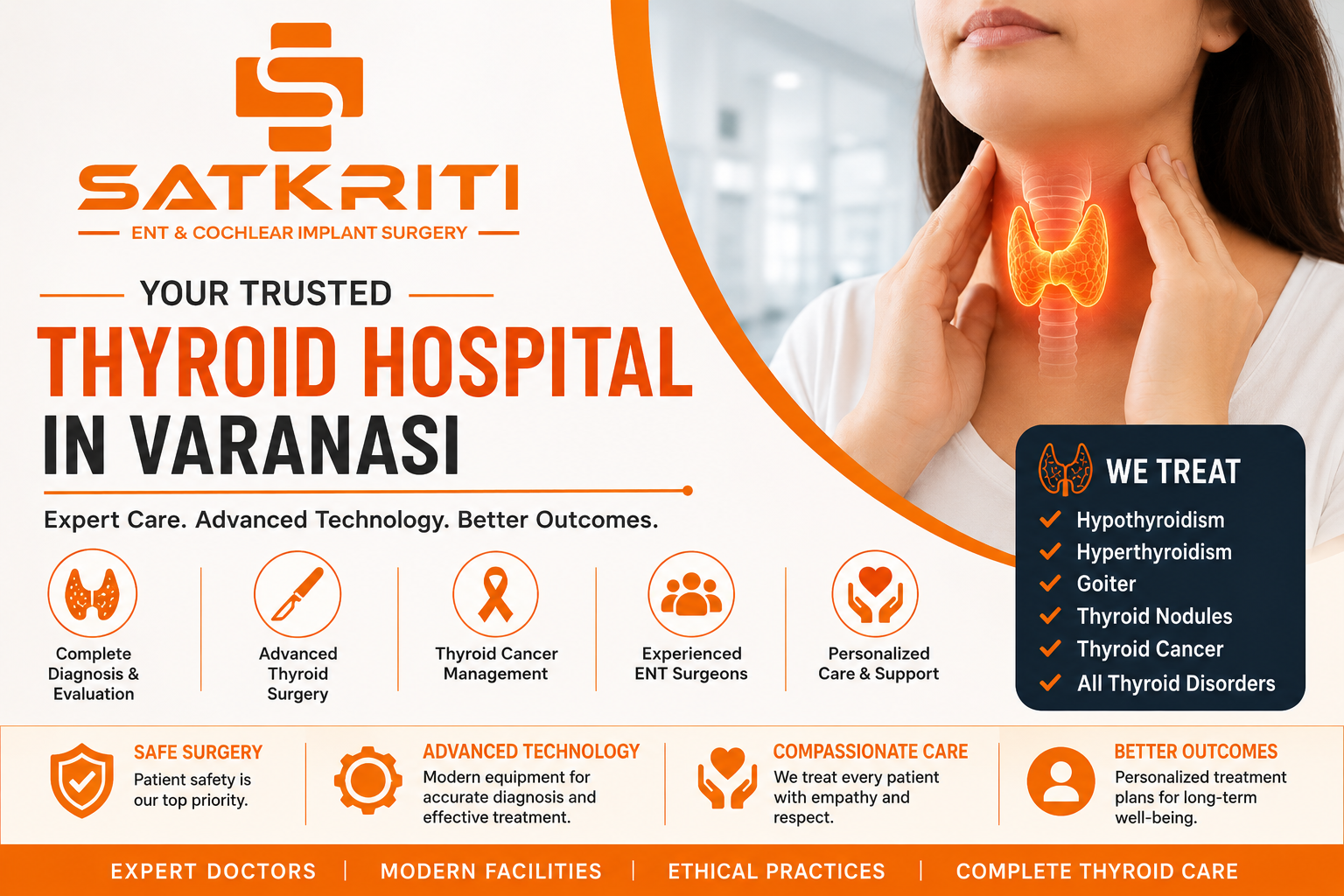
Are you looking for the best thyroid hospital in Varanasi? Whether you are suffering from thyroid swelling, thyroid nodules, goiter, hyperthyroidism, hypothyroidism, or thyroid cancer, choosing the right hospital is essential for accurate diagnosis and successful treatment.
At Satkriti Hospital, we provide comprehensive thyroid diagnosis, medical management, and advanced thyroid surgery under the supervision of experienced ENT specialists. Our hospital is equipped with modern diagnostic technology and advanced surgical facilities to ensure safe, precise, and patient-focused treatment. We offer thyroidectomy for both benign and malignant thyroid conditions, along with complete pre-operative evaluation and post-operative care.
If you or your loved one has been experiencing neck swelling, difficulty swallowing, voice changes, or unexplained weight changes, don’t ignore these symptoms. Early diagnosis can prevent complications and improve treatment outcomes.
Why Choose Satkriti Hospital for Thyroid Treatment in Varanasi?
When searching for the best thyroid hospital in Varanasi, patients need a hospital that combines experienced specialists, modern technology, accurate diagnosis, and compassionate care.
Satkriti Hospital has established itself as one of the leading ENT hospitals in Varanasi by providing advanced medical and surgical treatment for thyroid diseases. The hospital offers dedicated thyroid services, including thyroidectomy for benign and malignant conditions, thyroid cancer management, and both medical and surgical care tailored to each patient’s condition.
Our Highlights
- Expert ENT Surgeons
- Advanced Diagnostic Facilities
- Personalized Treatment Plans
- Modern Operation Theatres
- Comprehensive Thyroid Surgery
- Thyroid Cancer Management
- Post-operative Follow-up Care
- Patient-Centered Approach
- Convenient Location in Varanasi
- Affordable and Transparent Treatment
What is the Thyroid Gland?
The thyroid is a small butterfly-shaped gland located in the front of your neck. Although small in size, it plays a vital role in regulating many important body functions.
It produces hormones that help control:
- Metabolism
- Heart rate
- Body temperature
- Weight
- Energy levels
- Digestion
- Brain development
- Muscle function
When the thyroid gland produces too much or too little hormone, it can affect nearly every organ in the body.
Common Thyroid Disorders
Several thyroid disorders affect people of all ages. Some require medicines, while others may require surgery.
1. Hypothyroidism
Hypothyroidism occurs when the thyroid gland does not produce enough thyroid hormones.
Common symptoms include:
- Weight gain
- Fatigue
- Dry skin
- Hair fall
- Constipation
- Depression
- Cold intolerance
- Slow heartbeat
This condition is usually managed with lifelong thyroid hormone replacement under medical supervision.
2. Hyperthyroidism
Hyperthyroidism occurs when the thyroid produces excessive hormones.
Symptoms include:
- Weight loss
- Anxiety
- Tremors
- Excessive sweating
- Fast heartbeat
- Heat intolerance
- Difficulty sleeping
- Increased appetite
Some patients respond well to medication, while others may require surgery if symptoms persist or the gland is enlarged. (Satkriti Hospital)
3. Goiter
A goiter refers to an enlarged thyroid gland.
It may occur because of:
- Iodine deficiency
- Autoimmune disease
- Thyroid nodules
- Hyperthyroidism
- Hypothyroidism
A large goiter may cause:
- Visible neck swelling
- Difficulty swallowing
- Difficulty breathing
- Hoarseness of voice
4. Thyroid Nodules
Thyroid nodules are abnormal lumps that develop inside the thyroid gland.
Most nodules are non-cancerous, but some require detailed evaluation because they can be malignant.
Patients usually require:
- Clinical examination
- Thyroid function tests
- Ultrasound
- Fine Needle Aspiration Cytology (FNAC), when indicated
Depending on the findings, treatment may involve observation, medication, or surgery.
5. Thyroid Cancer
Although thyroid cancer is relatively uncommon, early diagnosis significantly improves treatment outcomes.
Common warning signs include:
- Persistent neck lump
- Enlarged lymph nodes
- Difficulty swallowing
- Voice changes
- Persistent throat discomfort
Treatment may include thyroid surgery followed by additional therapies, depending on the stage and type of cancer. Satkriti Hospital provides comprehensive thyroid cancer management with individualized treatment plans.
Symptoms That Should Never Be Ignored
Many thyroid disorders develop gradually, making them difficult to recognize in the early stages.
Consult a thyroid specialist if you experience:
- Swelling in the front of the neck
- Difficulty swallowing
- Persistent hoarseness
- Voice changes
- Difficulty breathing
- Unexplained weight gain
- Unexplained weight loss
- Fatigue
- Hair loss
- Excessive sweating
- Palpitations
- Anxiety
- Depression
- Cold intolerance
- Heat intolerance
- Tremors
- Constipation
- Irregular menstrual cycles
- Reduced concentration
- Sleep disturbances
Ignoring these symptoms can lead to long-term complications affecting the heart, metabolism, reproductive health, and overall quality of life.
What Causes Thyroid Problems?
Thyroid disorders may develop due to several reasons, including:
Autoimmune Diseases
Conditions such as Hashimoto’s thyroiditis and Graves’ disease are among the most common causes of thyroid dysfunction.
Iodine Deficiency
Although less common today, inadequate iodine intake can still contribute to thyroid enlargement and hormone imbalance.
Genetic Factors
A family history of thyroid disease increases the likelihood of developing thyroid disorders.
Thyroid Nodules
Some nodules produce excess hormones, while others may require evaluation for cancer.
Pregnancy
Hormonal changes during pregnancy can temporarily affect thyroid function and require close monitoring.
Radiation Exposure
Previous radiation therapy to the neck increases the risk of thyroid disease.
Certain Medications
Some medications can interfere with thyroid hormone production and function.
Part 2: Diagnosis, Treatment & Thyroid Surgery
Primary Keyword: Thyroid Hospital in Varanasi
How Are Thyroid Disorders Diagnosed?
At Satkriti Hospital, we believe that accurate diagnosis is the foundation of effective treatment. Since many thyroid disorders have symptoms similar to other health conditions, a detailed evaluation is essential before starting any treatment.
Our thyroid specialists use a combination of clinical examination, laboratory investigations, and advanced imaging techniques to identify the exact cause of the problem and recommend the most suitable treatment plan.
1. Detailed Medical History
The doctor will first ask about:
- Your symptoms and their duration
- Family history of thyroid disease
- Previous thyroid treatment
- Current medications
- Pregnancy history (if applicable)
- Previous neck surgery or radiation exposure
- Lifestyle and dietary habits
A thorough medical history often provides valuable clues that help guide further investigations.
2. Physical Examination
The ENT specialist carefully examines the neck to check for:
- Enlargement of the thyroid gland (Goiter)
- Thyroid nodules
- Neck swelling
- Tenderness
- Enlarged lymph nodes
- Voice changes
- Difficulty swallowing
This examination helps determine whether further imaging or laboratory tests are required.
3. Thyroid Function Tests
Blood tests are one of the most important investigations for thyroid disorders.
These include:
TSH (Thyroid Stimulating Hormone)
The most sensitive test used to detect thyroid dysfunction.
T3 Test
Measures the amount of Triiodothyronine hormone.
T4 Test
Measures Thyroxine hormone levels.
These tests help diagnose:
- Hypothyroidism
- Hyperthyroidism
- Subclinical thyroid disorders
- Response to treatment
4. Thyroid Ultrasound
Ultrasound provides detailed images of the thyroid gland.
It helps evaluate:
- Thyroid size
- Nodules
- Cysts
- Blood supply
- Suspicious growths
- Enlarged lymph nodes
Ultrasound is painless, radiation-free, and highly effective for thyroid assessment.
5. FNAC (Fine Needle Aspiration Cytology)
If a thyroid nodule appears suspicious, your doctor may recommend FNAC.
This procedure involves:
- Using a very thin needle
- Collecting a small sample of cells
- Sending it to the laboratory for microscopic examination
FNAC helps determine whether a thyroid nodule is benign or cancerous and guides further treatment decisions.
6. CT Scan or MRI (When Required)
In selected cases, advanced imaging may be needed to assess:
- Large goiters extending into the chest
- Thyroid cancer spread
- Compression of nearby structures
- Surgical planning
Treatment Options for Thyroid Disorders
Treatment depends on:
- Type of thyroid disease
- Severity
- Patient’s age
- Overall health
- Presence of nodules or cancer
- Response to previous treatment
The treatment plan is always personalized to ensure the best possible outcomes.
Medical Management of Thyroid Disorders
Not every thyroid problem requires surgery.
Many patients improve with medications alone.
Hypothyroidism Treatment
Patients with hypothyroidism usually require thyroid hormone replacement therapy.
Benefits include:
- Improved energy levels
- Better metabolism
- Reduced weight gain
- Better concentration
- Improved heart function
- Relief from fatigue
Regular blood tests help ensure the correct dosage.
Hyperthyroidism Treatment
Treatment may include:
- Anti-thyroid medications
- Beta blockers for symptom control
- Regular hormone monitoring
If medicines fail to control the disease or the thyroid gland becomes significantly enlarged, surgery may be recommended.
When Is Thyroid Surgery Required?
Not every thyroid condition requires surgery. However, surgery becomes the preferred treatment in several situations.
Your doctor may recommend thyroid surgery if you have:
- Large thyroid swelling
- Cosmetic neck swelling
- Difficulty swallowing
- Difficulty breathing
- Suspicious thyroid nodules
- Confirmed thyroid cancer
- Recurrent thyroid cysts
- Hyperthyroidism not responding to medicines
- Multinodular goiter
- Toxic thyroid nodules
Early surgical intervention can prevent complications and improve long-term outcomes.
What is Thyroidectomy?
A thyroidectomy is a surgical procedure in which part or all of the thyroid gland is removed.
It is one of the most effective treatments for several thyroid disorders and is performed using precise surgical techniques to minimize risks and preserve important structures such as the recurrent laryngeal nerves and parathyroid glands.
Types of Thyroid Surgery
1. Hemithyroidectomy
Only one lobe of the thyroid gland is removed.
Usually recommended for:
- Single thyroid nodule
- Benign tumors
- Diagnostic purposes
2. Total Thyroidectomy
The entire thyroid gland is removed.
Usually performed for:
- Thyroid cancer
- Large multinodular goiter
- Graves’ disease
- Extensive thyroid disease
After total thyroidectomy, patients require lifelong thyroid hormone replacement medication.
3. Near Total Thyroidectomy
Most of the thyroid gland is removed while preserving a small portion.
This procedure is selected in certain clinical situations depending on the patient’s condition.
Thyroid Surgery at Satkriti Hospital
At Satkriti Hospital, thyroid surgeries are performed by experienced ENT surgeons using modern surgical techniques with a strong emphasis on patient safety and optimal outcomes.
Our approach includes:
- Comprehensive pre-operative evaluation
- Advanced anesthesia support
- Modern operation theatre facilities
- Careful preservation of vocal cord nerves
- Preservation of parathyroid glands whenever possible
- Strict infection control measures
- Dedicated post-operative monitoring
- Personalized recovery plans
Our goal is to provide safe, effective, and patient-centered thyroid care.
What Happens Before Thyroid Surgery?
Before surgery, patients undergo a complete assessment to ensure they are fit for the procedure.
This typically includes:
- Blood investigations
- Thyroid hormone profile
- Ultrasound evaluation
- FNAC (if indicated)
- ECG
- Chest X-ray (if required)
- Anesthesia evaluation
- Fitness assessment
Patients also receive detailed counseling regarding the procedure, expected recovery, and post-operative care.
What Happens During Thyroid Surgery?
The surgery is performed under general anesthesia.
The surgeon makes a carefully planned incision in the lower part of the neck to access the thyroid gland. Depending on the condition, either part or all of the thyroid gland is removed.
Special care is taken to protect:
- Vocal cord nerves (recurrent laryngeal nerves)
- Parathyroid glands (which regulate calcium levels)
Once the procedure is completed, the incision is closed using cosmetic techniques to promote better healing.
Recovery After Thyroid Surgery
Most patients recover well after thyroid surgery.
Recovery generally involves:
- Short hospital stay
- Pain control with medications
- Early mobilization
- Gradual return to normal diet
- Wound care instructions
- Follow-up visits
- Thyroid hormone replacement (if needed)
Many patients can resume light daily activities within a few days, while full recovery may take a few weeks depending on the extent of surgery.
Possible Risks of Thyroid Surgery
Like any surgical procedure, thyroidectomy carries certain risks, although serious complications are uncommon when performed by experienced surgeons.
Potential risks include:
- Bleeding
- Infection
- Temporary hoarseness
- Rare permanent voice changes
- Low calcium levels due to parathyroid gland involvement
- Scar formation
- Need for lifelong thyroid hormone replacement (after total thyroidectomy)
At Satkriti Hospital, every effort is made to minimize these risks through meticulous surgical technique and comprehensive perioperative care.
Part 3 (Final): Thyroid Cancer, Prevention, FAQs & SEO Elements
Thyroid Cancer Treatment at Satkriti Hospital
Although thyroid cancer is less common than other thyroid disorders, it is one of the most treatable cancers when diagnosed early. Most patients recover well with timely surgery and appropriate follow-up care.
At Satkriti Hospital, thyroid cancer treatment begins with a thorough evaluation. The care plan is tailored according to the type, size, and stage of the cancer, as well as the patient’s overall health.
Common Symptoms of Thyroid Cancer
You should consult an ENT specialist immediately if you notice:
- A painless lump in the front of the neck
- Persistent swelling that gradually increases in size
- Hoarseness or change in voice
- Difficulty swallowing
- Difficulty breathing
- Persistent throat discomfort
- Enlarged lymph nodes in the neck
Diagnosis of Thyroid Cancer
To confirm the diagnosis, doctors may recommend:
- Physical examination
- Thyroid function tests
- Ultrasound of the neck
- FNAC (Fine Needle Aspiration Cytology)
- CT Scan or MRI (if required)
- Additional laboratory investigations before surgery
Treatment Options
Depending on the diagnosis, treatment may include:
- Partial thyroidectomy
- Total thyroidectomy
- Removal of affected lymph nodes (when required)
- Lifelong thyroid hormone replacement therapy after total thyroidectomy
- Regular follow-up and monitoring
Early diagnosis significantly improves treatment success and reduces the risk of complications.
Life After Thyroid Surgery
Many patients worry about how life will change after thyroid surgery. The good news is that most people return to their normal routine within a few weeks.
Recovery Tips
- Take medications exactly as prescribed.
- Attend all follow-up appointments.
- Keep the surgical wound clean and dry.
- Avoid strenuous activities until your doctor advises.
- Follow a healthy, balanced diet.
- Monitor thyroid hormone levels regularly.
- Report any unusual symptoms such as persistent hoarseness or tingling sensations immediately.
Patients who undergo total thyroidectomy will usually need lifelong thyroid hormone replacement medication, which helps maintain normal metabolism and overall health.
Diet for Thyroid Patients
A nutritious diet supports thyroid health and overall well-being. However, dietary recommendations may vary depending on the type of thyroid disorder, so always follow your doctor’s advice.
Foods That Support Thyroid Health
- Fresh fruits
- Green leafy vegetables
- Whole grains
- Lean proteins
- Eggs
- Fish
- Milk and dairy products
- Nuts and seeds
- Adequate iodine intake (as advised by your doctor)
Stay Hydrated
Drink enough water throughout the day to support overall health and metabolism.
Maintain a Healthy Weight
Regular exercise and balanced nutrition can help manage weight changes associated with thyroid disorders.
Can Thyroid Disorders Be Prevented?
Not all thyroid diseases are preventable, but certain healthy habits may reduce the risk or help with early detection.
Tips for Better Thyroid Health
- Eat a balanced diet with adequate iodine.
- Get regular health check-ups, especially if you have a family history of thyroid disease.
- Avoid smoking and tobacco use.
- Exercise regularly.
- Manage stress effectively.
- Follow your prescribed medications consistently.
- Do not ignore persistent neck swelling or voice changes.
Why Choose Satkriti Hospital for Thyroid Treatment in Varanasi?
If you are searching for a Thyroid Hospital in Varanasi, Satkriti Hospital offers comprehensive care with a patient-focused approach.
Our Strengths
- Experienced ENT specialists with expertise in thyroid disorders
- Advanced diagnostic facilities
- Personalized treatment plans
- Modern operation theatres
- Safe and precise thyroid surgery
- Comprehensive pre-operative and post-operative care
- Thyroid cancer evaluation and management
- Compassionate nursing and support staff
- Affordable treatment options
- Convenient location in Varanasi
Our goal is to provide high-quality care that ensures the best possible outcomes for every patient.
When Should You See a Thyroid Specialist?
Consult an ENT specialist if you experience:
- A lump or swelling in the neck
- Difficulty swallowing
- Difficulty breathing
- Persistent hoarseness
- Unexplained weight gain or weight loss
- Constant fatigue
- Excessive sweating
- Hair loss
- Irregular heartbeat
- Tremors
- Persistent throat discomfort
- Enlarged lymph nodes in the neck
Early consultation can lead to timely diagnosis and effective treatment.
Frequently Asked Questions (FAQs)
1. Which is the best thyroid hospital in Varanasi?
Satkriti Hospital provides comprehensive thyroid diagnosis, medical management, and advanced thyroid surgery with experienced ENT specialists and modern facilities.
2. What are the early symptoms of thyroid disease?
Common symptoms include neck swelling, fatigue, weight changes, hair loss, hoarseness, difficulty swallowing, and changes in heart rate.
3. Does every thyroid patient need surgery?
No. Many thyroid disorders can be managed with medications. Surgery is recommended only in selected cases such as large goiters, suspicious nodules, thyroid cancer, or uncontrolled hyperthyroidism.
4. Is thyroid surgery safe?
Yes. Thyroid surgery is generally safe when performed by experienced surgeons using modern surgical techniques.
5. How long does thyroid surgery take?
The duration depends on the complexity of the case but generally ranges from 1.5 to 3 hours.
6. How long is the hospital stay after thyroid surgery?
Most patients stay in the hospital for one to three days, depending on the procedure and recovery.
7. Will there be a scar after thyroid surgery?
A small scar is usually present, but with proper surgical techniques and wound care, it typically becomes less noticeable over time.
8. Can thyroid disease be cured?
Many thyroid disorders can be effectively controlled with medication or surgery. The outcome depends on the specific condition.
9. Can thyroid nodules be cancerous?
Most thyroid nodules are benign, but some may be cancerous. Proper evaluation with ultrasound and FNAC is essential.
10. Do I need lifelong medication after thyroid surgery?
Patients who undergo total thyroidectomy usually require lifelong thyroid hormone replacement therapy.
11. Can thyroid disease affect pregnancy?
Yes. Thyroid disorders can affect both fertility and pregnancy. Proper treatment before and during pregnancy is important.
12. How can I book an appointment at Satkriti Hospital?
You can contact the hospital directly through its official website or phone number to schedule a consultation with a thyroid specialist.
Conclusion
Thyroid disorders are common but highly manageable when diagnosed early and treated appropriately. Whether you are dealing with hypothyroidism, hyperthyroidism, thyroid nodules, goiter, or thyroid cancer, timely medical attention is essential to prevent complications and maintain a healthy quality of life.
At Satkriti Hospital, we are committed to providing comprehensive thyroid care—from accurate diagnosis and medical management to advanced thyroid surgery and long-term follow-up. Our experienced ENT specialists, modern infrastructure, and patient-centered approach ensure that every patient receives personalized, evidence-based treatment.
If you have noticed symptoms such as a neck swelling, voice changes, difficulty swallowing, or unexplained weight fluctuations, do not delay seeking expert advice. Early diagnosis and appropriate treatment can make a significant difference.
