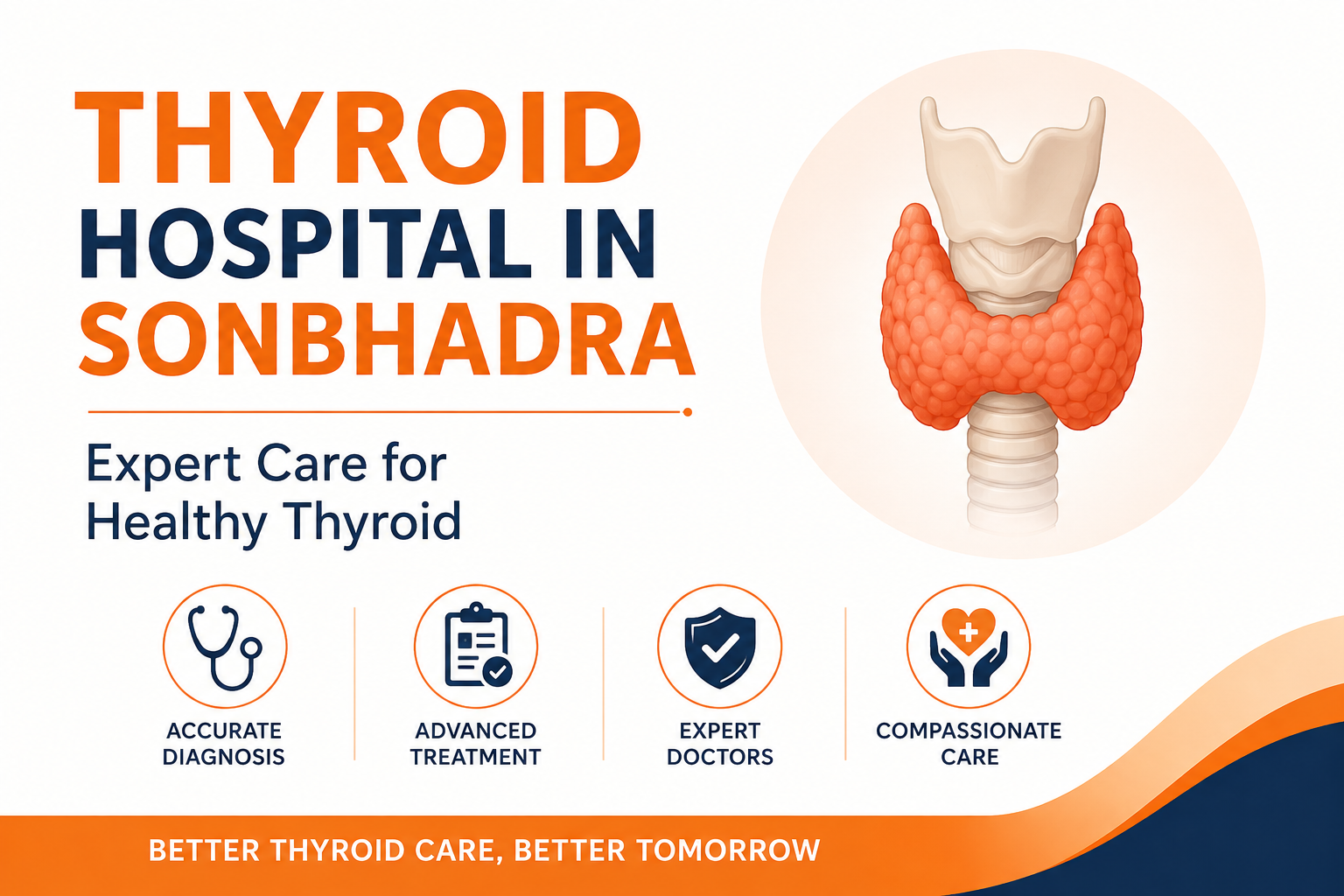
Thyroid disorders are among the most common hormonal conditions affecting people of all ages. If you are looking for a Thyroid Hospital in Sonbhadra, choosing a hospital with experienced specialists, advanced diagnostic facilities, and comprehensive treatment options is essential. Early diagnosis and proper management can prevent serious complications and help patients lead a healthy, active life.
A thyroid hospital provides complete evaluation and treatment for conditions such as hypothyroidism, hyperthyroidism, thyroid nodules, goiter, thyroid cysts, Hashimoto’s thyroiditis, Graves’ disease, and thyroid cancer. Modern thyroid care combines laboratory investigations, imaging, medications, lifestyle guidance, and surgical treatment whenever necessary. Government medical facilities in Sonbhadra have also expanded thyroid testing services, improving access to diagnosis for local residents.
What is the Thyroid Gland?
The thyroid is a butterfly-shaped endocrine gland located at the front of the neck. It produces two important hormones:
- T3 (Triiodothyronine)
- T4 (Thyroxine)
These hormones regulate:
- Body metabolism
- Heart function
- Brain development
- Body temperature
- Weight
- Energy levels
- Digestion
- Menstrual cycle
- Fertility
- Muscle function
The pituitary gland controls thyroid hormone production through Thyroid Stimulating Hormone (TSH). Any imbalance in these hormones can affect nearly every organ system.
Common Thyroid Disorders
1. Hypothyroidism (Underactive Thyroid)
Hypothyroidism occurs when the thyroid gland produces insufficient thyroid hormones.
Common Causes
- Hashimoto’s thyroiditis
- Iodine deficiency
- Previous thyroid surgery
- Radiation therapy
- Certain medications
- Congenital thyroid disease
Symptoms
- Fatigue
- Weight gain
- Dry skin
- Hair loss
- Constipation
- Depression
- Slow heartbeat
- Puffy face
- Cold intolerance
- Memory problems
Treatment usually involves lifelong thyroid hormone replacement with regular monitoring.
2. Hyperthyroidism (Overactive Thyroid)
Hyperthyroidism develops when the thyroid gland produces excessive hormones.
Causes
- Graves’ disease
- Toxic thyroid nodules
- Thyroid inflammation
- Excess iodine intake
Symptoms
- Weight loss
- Increased appetite
- Fast heartbeat
- Anxiety
- Tremors
- Excess sweating
- Heat intolerance
- Difficulty sleeping
- Muscle weakness
Treatment may include medications, radioactive iodine, or surgery depending on the cause.
3. Goiter
A goiter is an enlargement of the thyroid gland.
It may occur due to:
- Iodine deficiency
- Hyperthyroidism
- Hypothyroidism
- Thyroid nodules
- Autoimmune disorders
Patients may notice:
- Neck swelling
- Difficulty swallowing
- Voice changes
- Breathing discomfort
4. Thyroid Nodules
Thyroid nodules are abnormal lumps inside the thyroid gland.
Most nodules are benign, but some may require biopsy to rule out cancer.
Symptoms include:
- Neck lump
- Difficulty swallowing
- Hoarseness
- Cosmetic concerns
5. Thyroid Cancer
Although relatively uncommon, thyroid cancer is highly treatable when diagnosed early.
Warning signs include:
- Persistent neck swelling
- Enlarged lymph nodes
- Difficulty swallowing
- Voice changes
- Rapidly growing thyroid lump
Treatment may involve surgery, radioactive iodine, and long-term follow-up.
Risk Factors
You may have a higher risk of thyroid disease if you have:
- Family history
- Female gender
- Pregnancy
- Autoimmune diseases
- Diabetes
- Vitamin D deficiency
- Iodine deficiency
- Previous neck radiation
- Age above 35 years
Symptoms That Should Never Be Ignored
Visit a thyroid specialist if you experience:
- Constant tiredness
- Sudden weight gain
- Sudden weight loss
- Hair fall
- Neck swelling
- Difficulty swallowing
- Fast heartbeat
- Depression
- Anxiety
- Excessive sweating
- Irregular menstrual periods
- Infertility
- Persistent constipation
- Voice changes
Thyroid Diagnosis
A thyroid hospital offers comprehensive diagnostic facilities.
Blood Tests
- TSH
- Free T3
- Free T4
- Thyroid Antibodies
- Thyroglobulin
- Calcitonin (when indicated)
Thyroid Ultrasound
Ultrasound helps identify:
- Thyroid nodules
- Cysts
- Enlargement
- Suspicious lesions
- Blood flow
Fine Needle Aspiration Cytology (FNAC)
FNAC is recommended for suspicious thyroid nodules to determine whether they are benign or malignant.
Thyroid Scan
A radioactive iodine scan helps evaluate thyroid function in selected patients with hyperthyroidism or nodules.
CT or MRI
Advanced imaging may be required when large thyroid masses extend into the chest or compress nearby structures.
Treatment Options
Treatment depends on the specific thyroid disorder.
Medication
Common medications include:
- Levothyroxine for hypothyroidism
- Antithyroid drugs for hyperthyroidism
- Beta blockers for symptom relief
Regular follow-up is essential to adjust medication doses.
Radioactive Iodine Therapy
This treatment is used for:
- Hyperthyroidism
- Graves’ disease
- Selected thyroid cancer cases
It safely destroys overactive thyroid tissue without surgery.
Thyroid Surgery
Surgery may be recommended for:
- Large goiter
- Thyroid cancer
- Suspicious nodules
- Cosmetic concerns
- Compression symptoms
- Uncontrolled hyperthyroidism
Types include:
- Hemithyroidectomy
- Total thyroidectomy
- Near-total thyroidectomy
Recovery After Thyroid Surgery
Most patients recover quickly.
Recovery generally includes:
- One to three days of hospitalization
- Pain management
- Voice monitoring
- Calcium level monitoring
- Thyroid hormone replacement if required
- Regular follow-up visits
Lifestyle Tips for Thyroid Patients
Healthy habits improve long-term thyroid health.
Eat a balanced diet
Include:
- Iodized salt
- Fruits
- Vegetables
- Lean protein
- Whole grains
Exercise regularly
Physical activity helps:
- Maintain weight
- Improve energy
- Reduce stress
- Improve metabolism
Sleep Well
Aim for 7–8 hours of quality sleep daily.
Avoid Self-Medication
Never change thyroid medication doses without consulting your doctor. Taking medicine consistently—typically on an empty stomach at the same time each day—is important for effective treatment.
Regular Monitoring
Patients should undergo periodic thyroid function tests as advised by their physician.
Thyroid Disorders During Pregnancy
Pregnancy increases the importance of thyroid hormone balance.
Untreated thyroid disease can increase the risk of:
- Miscarriage
- Premature birth
- Low birth weight
- High blood pressure
- Developmental problems in the baby
Pregnant women should undergo timely thyroid screening when advised by their healthcare provider.
Thyroid Disorders in Children
Children may develop:
- Congenital hypothyroidism
- Autoimmune thyroid disease
- Thyroid nodules
- Hyperthyroidism
Early diagnosis supports healthy growth and brain development.
Can Thyroid Disorders Be Prevented?
Not all thyroid diseases are preventable, but the following measures may help:
- Eat iodine-rich foods
- Maintain a healthy lifestyle
- Exercise regularly
- Avoid smoking
- Manage stress
- Attend regular health checkups
- Seek medical evaluation for persistent symptoms
Why Choose a Specialized Thyroid Hospital?
A dedicated thyroid center provides:
- Experienced physicians and surgeons
- Accurate laboratory testing
- Thyroid ultrasound
- FNAC services
- Personalized medication plans
- Surgical expertise
- Long-term follow-up
- Patient education and counseling
Frequently Asked Questions
Is thyroid disease curable?
Many thyroid disorders can be effectively controlled with medication, while others may require surgery or radioactive iodine depending on the diagnosis.
Can thyroid disease cause weight changes?
Yes. Hypothyroidism often causes weight gain, whereas hyperthyroidism commonly causes weight loss.
Is thyroid surgery safe?
Yes. When performed by experienced surgeons, thyroid surgery is generally safe with a high success rate.
Can thyroid patients live a normal life?
Yes. Most people with thyroid disorders lead healthy, active lives with appropriate treatment and regular monitoring.
How often should thyroid tests be done?
The frequency depends on your condition, treatment plan, and your doctor’s recommendation.
Conclusion
If you are searching for a Thyroid Hospital in Sonbhadra, choose a healthcare center that offers comprehensive thyroid diagnosis, personalized treatment, advanced imaging, laboratory services, and experienced specialists. Early detection and regular follow-up are the keys to preventing complications and maintaining long-term thyroid health. Whether you have hypothyroidism, hyperthyroidism, thyroid nodules, goiter, or thyroid cancer, timely medical care can significantly improve your quality of life. Advances in thyroid testing and treatment are also becoming more accessible in Sonbhadra, helping patients receive earlier diagnosis and appropriate management closer to home.
