

Diabetes and Hearing Loss: Why This Connection Matters for Your Care.
November 3, 2026
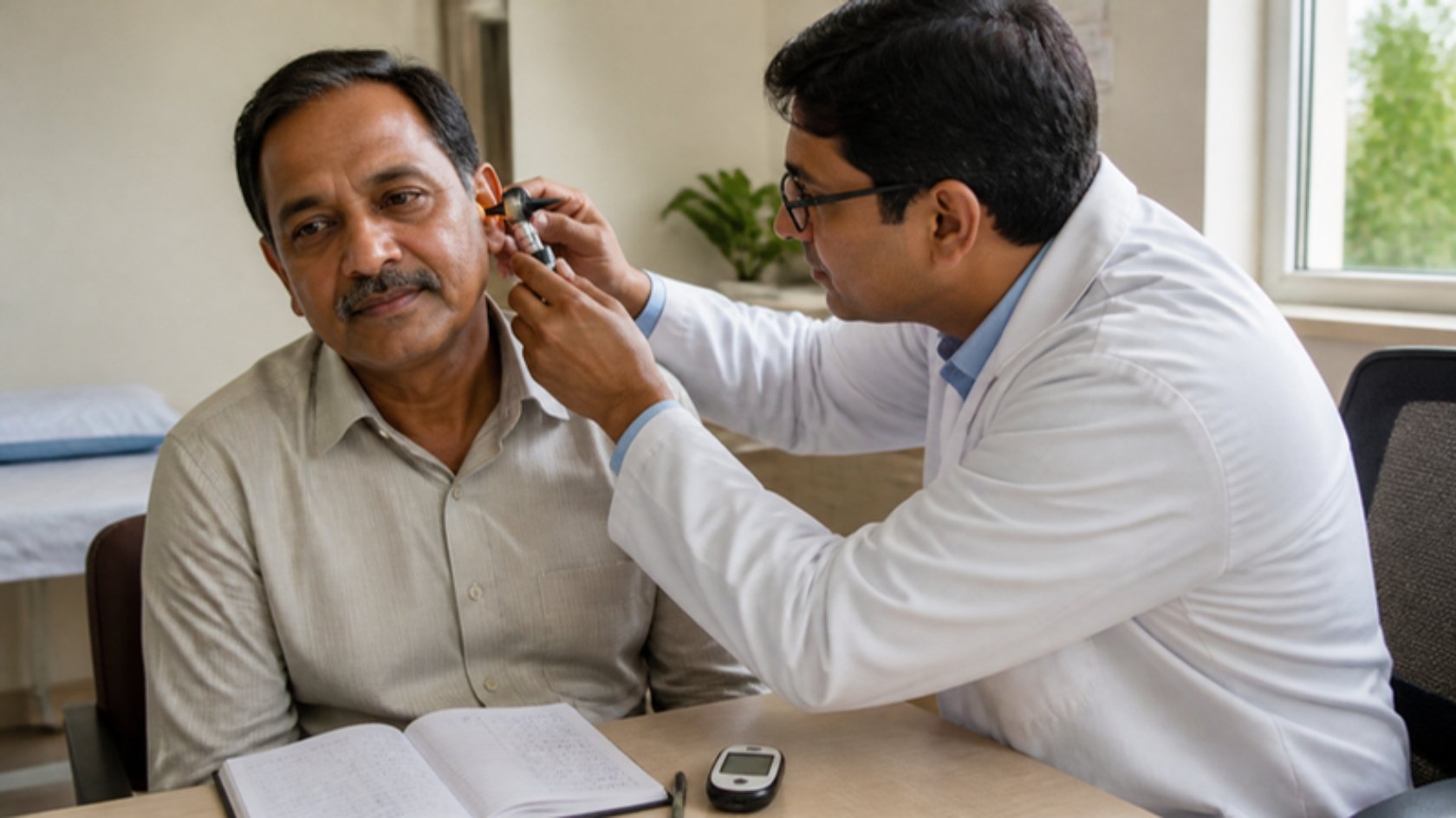
Most people who live with diabetes watch their blood sugar, their feet, and their eyes closely, because doctors tell them to. Far fewer are told to watch their hearing. Yet the link between diabetes and hearing loss is one that researchers have studied for years, and the evidence is strong enough that it deserves a regular place in diabetic check-ups rather than an afterthought.
The CDC notes that adults with diabetes are about twice as likely to develop hearing loss as those without the condition, and the reason comes down to how high blood sugar affects the small blood vessels and nerves inside the inner ear. At Satkriti Hospital in Varanasi, where ENT care and diabetic care exist under the same roof, this connection is not a footnote. It shapes how patients coming in for either condition are evaluated. This guide explains what actually happens inside the ear when blood sugar runs high, the signs worth watching for, and what a combined approach to diabetes and hearing can look like in practice.
How High Blood Sugar Affects the Inner Ear
The inner ear relies on some of the smallest blood vessels and nerve fibers in the body to turn sound waves into signals the brain can use. These structures are delicate, and they respond to the same kind of damage diabetes causes elsewhere, in the eyes, the kidneys, and the feet. Over months and years, elevated glucose levels can thicken the walls of these tiny blood vessels and reduce the oxygen and nutrients reaching the cochlea.
The nerves that carry sound signals to the brain can be affected in a pattern similar to diabetic neuropathy in the hands or feet. This is why hearing loss linked to diabetes usually develops gradually rather than all at once, which also makes it easy to miss until it has already progressed.
Why Diabetic Patients Face a Higher Risk
Research summarized by the American Diabetes Association and the CDC points to a consistent pattern: adults with diabetes are roughly twice as likely to have some degree of hearing loss compared to adults without diabetes. The risk appears to climb with how long a person has had diabetes and how well their blood sugar has been managed over that time.
Other common complications of diabetes, such as high blood pressure and reduced circulation, add further strain on the inner ear's blood supply. None of this means hearing loss is inevitable for every diabetic patient. It means regular hearing checks deserve the same priority as the eye and foot exams most patients already know to schedule.
Early Signs You Should Not Brush Off
Hearing changes caused by diabetes rarely announce themselves with sudden, obvious symptoms. More often, patients notice:
- Needing the television or phone volume higher than before
- Asking people to repeat themselves, especially in noisy rooms like markets or family gatherings
- Trouble following conversations when more than one person is speaking
- A ringing, buzzing, or hissing sound in one or both ears (tinnitus)
- A feeling that speech sounds muffled even when the volume seems fine
Any one of these on its own is worth mentioning to a doctor. Together, especially in someone managing diabetes, they are a clear reason to book a hearing evaluation rather than wait for things to get worse.
Why ENT Care and Diabetic Care Should Not Be Treated as Separate Problems
In most cities, a patient managing diabetes sees one doctor for blood sugar and, if hearing problems come up, gets referred elsewhere for an ENT opinion. The two visits rarely connect, and the diabetic history that would help an ENT specialist interpret a hearing test often gets lost along the way.
Satkriti Hospital was built around a different idea. Dr. Manoj Kumar Gupta founded the hospital in Varanasi in 2012 specifically to bring ENT and diabetic care together under one roof, so a patient's full picture, blood sugar history included, becomes part of every hearing evaluation and every treatment decision.
What a Combined Evaluation Looks Like
When a diabetic patient comes in for a hearing concern, the evaluation typically includes a review of recent blood sugar readings alongside standard ear care and hearing tests. This matters because a hearing loss pattern tied to diabetes often looks different from age-related or noise-induced hearing loss, and knowing which one a patient is dealing with changes the treatment plan. It also means any diabetic foot, eye, or kidney monitoring already underway through our diabetes care program does not have to be repeated or re-explained.
Diagnostic Tests That Help Catch Hearing Loss Early
Catching diabetes-related hearing loss early gives patients more options. The audiology and endoscopy unit at Satkriti Hospital uses:
- Pure Tone Audiometry (PTA) to measure the quietest sounds a patient can hear across different pitches
- Impedance audiometry to check how well the middle ear is functioning
- Otoacoustic Emissions (OAE) testing to assess the inner ear's response to sound
- BERA (Brainstem Evoked Response Audiometry) for a closer look at how sound signals travel to the brain
These tests are quick, painless, and give a far clearer picture than simply asking a patient whether they feel they are hearing well, since many people underestimate how much their hearing has actually changed.
Protecting Your Hearing While Managing Diabetes
The CDC and American Diabetes Association both point to blood sugar control as the most practical step a diabetic patient can take to lower their hearing loss risk. In practice, this looks like the same routine most diabetic patients are already working on:
- Keeping blood sugar within the range your doctor has set, not only on the days you have an appointment
- Attending scheduled eye, foot, and kidney checkups, since these often catch circulation problems that also affect the ears
- Managing blood pressure and cholesterol, which influence blood flow to the inner ear
- Avoiding prolonged exposure to loud noise, which adds further strain on ears already under stress from blood sugar swings
- Scheduling a baseline hearing test if you have had diabetes for several years and have not had one recently
None of these steps guarantee hearing loss will not develop, but they meaningfully reduce the odds and often slow its progress if it has already started.
Treatment Options When Hearing Loss Has Already Set In
If a hearing evaluation shows some degree of loss, the right treatment depends on the type and severity involved, not a single standard answer. For mild to moderate loss, modern hearing aids, including behind-the-ear and completely-in-canal models, can restore a meaningful amount of clarity, particularly for conversation and speech. For patients with severe to profound hearing loss who get limited benefit from hearing aids, a cochlear implant is a separate option worth discussing with an ENT specialist, since it works on a different principle and bypasses the damaged parts of the ear entirely. Either path starts with an accurate diagnosis, which is why testing matters as much as the treatment itself.
Common Questions Patients Ask Us
Can high blood sugar cause sudden hearing loss?
Sudden hearing loss is uncommon with diabetes alone and usually points to a different cause that needs urgent attention. What diabetes more typically causes is a gradual decline over years, which is exactly why regular checks matter more than waiting for a dramatic symptom.
If I control my blood sugar well, will my hearing improve?
Good blood sugar control can slow or help prevent further damage, but hearing loss that has already occurred from nerve or blood vessel damage does not usually reverse on its own. This is why catching changes early, before significant damage sets in, makes the biggest difference.
Should every diabetic patient get a hearing test, even without symptoms?
Generally, yes. Diabetes-related hearing loss tends to progress quietly. A baseline test lets your doctor track any change over time rather than discovering it only after it has started affecting daily life.
Is tinnitus, or ringing in the ears, connected to diabetes?
Tinnitus has several possible causes, but it can appear alongside diabetes-related changes in the inner ear's blood supply and nerves. If it is new, persistent, or paired with any hearing change, it is worth having checked rather than ignored.
Frequently Asked Questions
How much more likely is a person with diabetes to develop hearing loss?
Studies cited by the CDC and American Diabetes Association suggest adults with diabetes are about twice as likely to have some degree of hearing loss compared to adults without diabetes.
What age group is most at risk for diabetes-related hearing loss?
Risk tends to increase with age and with how many years someone has lived with diabetes, though hearing changes have been documented in diabetic adults across a wide age range.
Can both type 1 and type 2 diabetes affect hearing?
Yes, both types can affect the small blood vessels and nerves in the inner ear over time, though most available research has focused on type 2 diabetes.
Does Satkriti Hospital treat diabetes and ENT conditions at the same location?
Yes. Satkriti Hospital in Varanasi was built to offer ENT and diabetic care together, so patients do not need to manage two separate relationships for conditions that often overlap.
How often should a diabetic patient schedule a hearing check?
Many ENT specialists recommend an annual hearing check for diabetic patients, similar to the yearly eye and foot exams already recommended for diabetes management, though your exact interval should be confirmed with your doctor.
Are hearing aids effective for diabetes-related hearing loss?
Hearing aids can be effective for mild to moderate hearing loss, including cases linked to diabetes, by amplifying and clarifying sound. The right fit depends on the degree and pattern of loss found during testing.
What should I bring to a hearing evaluation if I have diabetes?
Recent blood sugar readings or your diabetes management records are helpful, since they give the ENT team context that can shape how your test results are interpreted.
Book a Combined ENT and Diabetic Consultation
If you live with diabetes and have not had your hearing checked recently, or if you have noticed any of the changes described above, do not wait for it to become harder to manage. Book an appointment at Satkriti Hospital in Varanasi and get a clear, tested picture of where you stand. You can also call +91 87658 48001 to speak with our team and schedule a visit.
By Satkriti Hospital
Comment
Your email address will not be published. Required fields are marked *