
Satkriti Hospital Varanasi: Complete Guide to Services, Departments, NABH Accreditation, and Patient Reviews 2026
October 28, 2026
By Dr. Manoj Kumar Gupta, DNB (ENT), Founder — Satkriti Hospital, Varanasi
More than a million patients have walked through Satkriti Hospital's doors over twenty-five years. That number reflects something beyond the physical count of consultations and procedures. It reflects families from Azamgarh and Ghazipur who chose to travel past closer options. It reflects parents from Bihar and Jharkhand who brought their deaf children to Varanasi for cochlear implant surgery. It reflects elderly patients from the Purvanchal region who, after years of managing worsening hearing loss, finally found a specialist team that could accurately diagnose and treat the cause.
This guide answers the practical questions that patients and families ask before choosing Satkriti Hospital — what departments are available, what surgeries are performed, who the doctors are, what the hospital's accreditation means for patient safety, and how the government health schemes work for eligible families.
What Is Satkriti Hospital?
Satkriti Hospital is a specialty ENT (Ear, Nose, and Throat) hospital located in Varanasi, Uttar Pradesh. It was founded by Dr. Manoj Kumar Gupta, who has led the clinical team for over twenty-five years. The hospital specialises exclusively in ENT, head and neck surgery, and audiology — making it one of the few truly focused ENT specialty hospitals in the Purvanchal region.
The name "Satkriti" carries meaning. In Sanskrit, it signifies noble action and good conduct — a philosophy that Dr. Gupta describes as central to how the hospital approaches patient care: transparent communication, appropriate investigation before treatment, honest discussion of surgical options and their realistic outcomes, and consistent quality across every patient encounter.
Location and Contact:
Satkriti Hospital, Varanasi, Uttar Pradesh
Phone: +91 94542 19800
Website: satkritihospital.com
Departments and Clinical Services
1. Ear (Otology) Department
The Ear department handles the full spectrum of ear conditions from children and adults across all age groups.
Chronic Ear Disease: Chronic suppurative otitis media (CSOM), persistent eardrum perforations, and cholesteatoma — a destructive skin cyst that erodes ear bones and adjacent structures — are managed through surgical and non-surgical means. The standard operative procedures include Tympanoplasty (Types I through V for eardrum repair with varying levels of ossicular chain reconstruction), Myringoplasty, and Mastoidectomy (both canal wall up and canal wall down approaches).
Sudden Hearing Loss: Sudden sensorineural hearing loss is treated as an ENT emergency. Prompt steroid treatment — systemic or intratympanic — gives the best chance of recovery and is initiated on the day of presentation.
Glue Ear in Children: Otitis media with effusion (middle ear fluid accumulation) is among the most common causes of hearing loss in children of school age. Where it does not resolve with watchful waiting, grommet insertion allows drainage and ventilation of the middle ear.
Ossicular Chain Reconstruction: Where the three ear bones have been damaged by chronic infection, trauma, or cholesteatoma, reconstruction using titanium or hydroxyapatite prostheses (PORP and TORP) can restore meaningful hearing.
Ear Canal Conditions: Otitis externa, exostoses (bony growths narrowing the ear canal), foreign body removal, and wax impaction.
2. Cochlear Implant Programme
Satkriti Hospital's cochlear implant programme is one of its most distinctive capabilities — and among the most established in eastern Uttar Pradesh. The programme has been operational for over a decade and has transformed the lives of children who would otherwise have faced profound hearing loss without access to implantation in their home region.
What the programme covers: Comprehensive audiological workup including BERA (Brainstem Evoked Response Audiometry) and OAE (Otoacoustic Emissions) testing, candidacy assessment, surgical implantation, post-operative processor fitting and mapping, auditory verbal therapy (AVT), and long-term rehabilitation.
ADIP-CI Scheme: Satkriti Hospital is an authorised centre under the ADIP-CI (Assistance to Disabled Persons for Purchase/Fitting of Aids/Appliances — Cochlear Implant) scheme run by the Government of India's Department of Empowerment of Persons with Disabilities. Under this scheme, eligible children with profound bilateral sensorineural hearing loss receive cochlear implant surgery, the device, and post-operative rehabilitation at no cost. The eligibility criteria include: age below six years, profound hearing loss (90 dB or worse in the better ear), and family income below ₹6 lakh per annum.
Cochlear implant in children: Dr. Manoj Kumar Gupta has performed cochlear implant surgery in children as young as twelve months. Earlier implantation — before age two, ideally before age one — produces significantly better language outcomes because the brain's auditory pathways are most plastic in the first years of life. The goal at Satkriti Hospital's programme is not merely to implant a device but to support each child through the full rehabilitation journey to spoken language.
PMJAY coverage: Cochlear implant surgery is covered under Ayushman Bharat PMJAY at empanelled hospitals. For families who do not qualify for ADIP-CI, PMJAY coverage significantly reduces the financial barrier.
3. Nose and Sinus (Rhinology) Department
The Rhinology department covers conditions affecting the nasal cavity, paranasal sinuses, and the structures of the nasal septum.
Chronic Sinusitis and FESS: Functional Endoscopic Sinus Surgery (FESS) is a minimally invasive procedure performed entirely through the nostrils using a thin camera. It opens blocked sinus drainage pathways, removes diseased tissue, and excises nasal polyps. Satkriti Hospital performs FESS in its NABH-accredited modular operating theatre. The procedure is performed under general anaesthesia and most patients require one night's hospitalisation.
Deviated Nasal Septum (DNS) and Septoplasty: The nasal septum — the wall dividing the nose into two passages — is deviated in a significant proportion of adults, often causing chronic nasal obstruction on one side. Septoplasty surgically corrects this. It is frequently combined with FESS when both conditions are present, allowing both to be addressed in a single anaesthetic.
Nasal Polyps: These benign growths arise from the sinus mucosa, often in association with allergic rhinitis or asthma. Large polyps cause complete nasal obstruction and loss of smell. FESS removes polyps, but long-term management requires control of the underlying allergic inflammation with nasal steroid sprays and regular follow-up.
Allergy Clinic: Satkriti Hospital provides structured allergy evaluation including Skin Prick Testing for regional aeroallergens, and allergen immunotherapy (subcutaneous and sublingual) for appropriate candidates.
Septorhinoplasty: Corrective nasal surgery for both functional and cosmetic concerns, performed by the ENT surgical team.
4. Throat, Tonsil, and Adenoid Department
Tonsillectomy and Adenoidectomy: Satkriti Hospital was among the first hospitals in the Varanasi region to introduce Coblation-assisted tonsillectomy in 2017–18. Coblation uses radiofrequency energy delivered through a saline medium, creating plasma at 40–70°C rather than the 400°C or higher temperatures of traditional electrocautery. The lower thermal damage results in a significantly less painful post-operative experience and faster return to normal diet and activity — five to seven days with Coblation versus ten to fourteen with traditional technique.
Indications for tonsillectomy include recurrent bacterial tonsillitis meeting published clinical criteria (seven episodes in one year, or five episodes per year for two consecutive years, or three episodes per year for three years), obstructive sleep apnoea due to tonsillar and adenoid hypertrophy, and peritonsillar abscess after appropriate management.
Paediatric Airway: Adenoid hypertrophy in children causes nasal obstruction, mouth breathing, sleep disturbance, snoring, and eustachian tube dysfunction leading to glue ear. Endoscopic adenoidectomy with or without grommet insertion is among the most common paediatric ENT procedures at Satkriti Hospital.
Voice and Larynx: Laryngoscopy for assessment of hoarseness, vocal cord pathology, and laryngeal masses. Voice assessment and referral for voice therapy when appropriate.
Swallowing Assessment: Dysphagia (swallowing difficulty) arising from pharyngeal or laryngeal causes.
5. Head and Neck Surgery Department
Thyroid Surgery: Satkriti Hospital performs total thyroidectomy, hemithyroidectomy, and completion thyroidectomy for thyroid nodules, multinodular goitre, Graves' disease, and thyroid carcinoma. A particular focus of the programme is intraoperative recurrent laryngeal nerve (RLN) monitoring — a system that provides continuous real-time feedback about the nerve's functional integrity throughout the procedure. The recurrent laryngeal nerve controls vocal cord movement; injury produces hoarseness or, in bilateral injury, breathing difficulty. Intraoperative neuromonitoring significantly reduces this risk.
Parathyroid Surgery: Primary hyperparathyroidism managed through focused parathyroidectomy guided by pre-operative imaging.
Neck Masses: Evaluation of cervical lymphadenopathy, branchial cysts, thyroglossal cysts, and other neck masses with appropriate imaging, fine needle aspiration cytology, and surgical management.
Parotid Surgery: Parotidectomy for parotid gland tumours (predominantly benign pleomorphic adenomas) and parotid cysts.
Head and Neck Oncology: Management of oral cavity, oropharyngeal, laryngeal, and thyroid malignancies within the scope of the ENT surgical team.
6. Audiology and Hearing Rehabilitation
Satkriti Hospital's in-house audiology suite performs the full range of audiological testing:
Pure Tone Audiometry (PTA): The standard test for measuring hearing thresholds across speech frequencies, reported as a graph (audiogram) showing the degree and type of hearing loss.
Tympanometry: Assessment of eardrum mobility and middle ear pressure.
Otoacoustic Emissions (OAE): A fast, objective test of inner ear (cochlear) function, used for newborn hearing screening and paediatric assessment.
Brainstem Evoked Response Audiometry (BERA / ABR): Objective measurement of the auditory nerve and brainstem pathways; used when behavioural testing is not possible (infants, uncooperative children) and for assessment of auditory neuropathy spectrum disorder (ANSD).
Video Head Impulse Testing (vHIT): Assessment of semicircular canal function in patients with vestibular (balance) disorders.
Speech Audiometry: Testing of word recognition ability beyond the pure tone threshold.
Hearing aid fitting and dispensing services are also available, with follow-up programming to optimise benefit. Cochlear implant mapping (programming the speech processor after implantation) is performed on-site, so families implanted at Satkriti Hospital do not need to travel to another city for post-operative care.
7. Vestibular (Balance) Clinic
Dizziness and vertigo are among the most common and most mismanaged conditions in general medicine. The majority of vertigo presentations are caused by inner ear disorders — BPPV (Benign Paroxysmal Positional Vertigo), vestibular neuritis, Ménière's disease, and labyrinthitis — conditions that are diagnosed and managed primarily by ENT specialists with vestibular expertise.
At Satkriti Hospital, the vestibular clinic uses structured protocols including Dix-Hallpike testing and Roll Testing for BPPV, with Epley Manoeuvre and Semont Manoeuvre performed bedside for appropriate patients. vHIT testing allows objective assessment of semicircular canal function. Intratympanic steroid injection for refractory Ménière's disease is available at Satkriti Hospital. Vestibular rehabilitation exercises are prescribed for patients with vestibular neuritis and persistent dizziness.
NABH Accreditation: What It Means for Patients
The National Accreditation Board for Hospitals and Healthcare Providers (NABH) is the apex accreditation body for healthcare organisations in India, operating under the Quality Council of India. NABH accreditation is not self-declared — it requires an independent external assessment against over 600 criteria covering every aspect of hospital operations.
Satkriti Hospital holds NABH accreditation. For patients, this translates into concrete safety guarantees:
Surgical Safety: The WHO Surgical Safety Checklist is a mandatory protocol — a structured verification process before every surgery that confirms patient identity, procedure site, allergies, anaesthesia equipment readiness, and anticipated complications. NABH accreditation verifies that this is actually followed, not just displayed on a wall.
Modular Operating Theatre: Satkriti Hospital's OT meets NABH-specified standards for air handling, positive pressure ventilation, and surface materials. This directly reduces infection risk.
Infection Control: Sterilisation protocols, hand hygiene compliance, and healthcare-associated infection surveillance are all assessed against defined standards. NABH accreditation provides external verification that these are consistently maintained.
Medication Safety: Medication reconciliation, labelling, storage, and administration protocols are evaluated. This includes requirements around high-alert medications and anaesthetic agents.
Informed Consent: NABH requires documented, informed consent before every procedure, with evidence that the patient or guardian was given adequate information in an understandable form.
Patient Rights: Mechanisms for complaints, second opinions, and discharge against medical advice are required to be in place and communicated to patients.
NABH accreditation is among a small number of ENT specialty hospitals in Varanasi to hold this standard. Patients can verify accreditation independently at nabh.co — do not rely solely on a hospital's own description of its accreditation status.
Ayushman Bharat PMJAY at Satkriti Hospital
Satkriti Hospital is empanelled under the Pradhan Mantri Jan Arogya Yojana (PMJAY) — the national health insurance scheme providing coverage of up to Rs. 5 lakh per family per year for hospitalisation costs at empanelled hospitals.
ENT surgeries covered under PMJAY at Satkriti Hospital include:
Cochlear implant surgery (device cost where ADIP-CI does not apply)
Tympanoplasty (all types) and Myringoplasty
Mastoidectomy
FESS (Functional Endoscopic Sinus Surgery)
Septoplasty and Septorhinoplasty
Nasal Polypectomy
Tonsillectomy and Adenoidectomy
Thyroid surgery
Parotidectomy
Eligibility: PMJAY eligibility is based on inclusion in the Socio-Economic Caste Census (SECC) 2011 database for rural families, and state-defined criteria for urban families. In Uttar Pradesh, the scheme has been extended to include additional state-specific beneficiaries. Families not found in the database can check eligibility at pmjay.gov.in or call the central helpline at 14555.
No referral required: For empanelled private hospitals like Satkriti Hospital, no referral from a government hospital is necessary. Bring your Ayushman Bharat Golden Card and Aadhaar card. Satkriti Hospital's front desk team verifies eligibility and processes pre-authorisation at the time of registration.
No separate process for PMJAY patients: All patients at Satkriti Hospital receive the same standard of clinical care, the same operating theatre, the same surgical team, and the same post-operative protocols regardless of whether they are paying privately or under PMJAY.
The Clinical Team
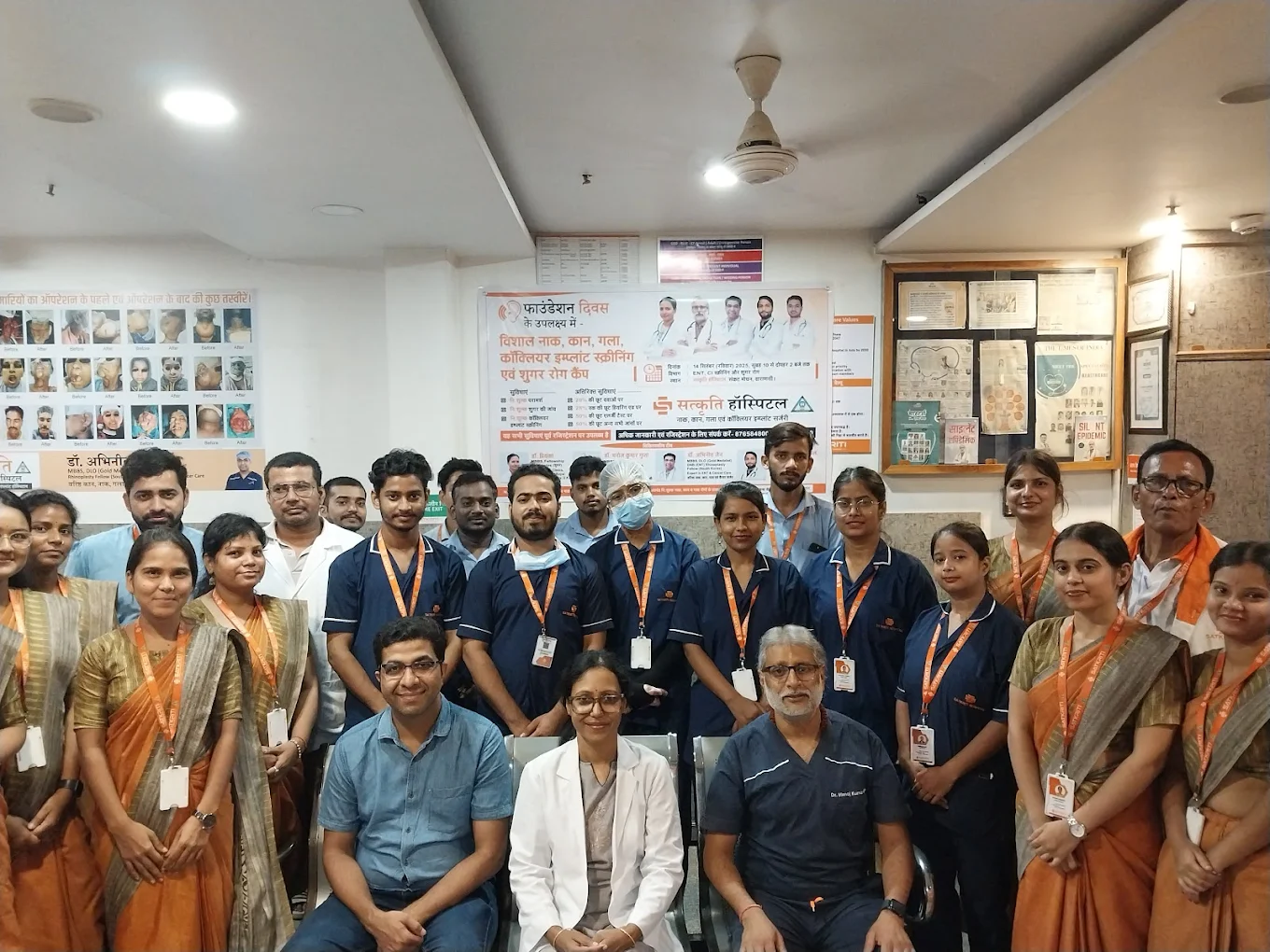
Satkriti Hospital has a team of seven ENT consultants and surgeons.
Dr. Manoj Kumar Gupta, DNB (ENT) — Founder and Chief ENT Surgeon. DNB qualification (a full three-year national board surgical residency in Otorhinolaryngology). Over twenty-five years of ENT surgical practice with special expertise in cochlear implant surgery, vestibular disorders, paediatric ENT, and head and neck surgery. More than ten thousand ENT procedures across all subspecialties.
Dr. Abhineet Jain — ENT Consultant, Satkriti Hospital.
Dr. Ankit Ojha — ENT Consultant, Satkriti Hospital.
The full team of seven qualified ENT consultants allows patients to be matched to the consultant with the most relevant expertise for their specific condition — not simply whoever is available on a given day.
Patients Satkriti Hospital Serves
Satkriti Hospital draws patients from a wide geographic catchment reflecting the hospital's reputation and the relative scarcity of equivalent ENT specialty centres in the region:
Varanasi city and district — the primary catchment.
Purvanchal region — Jaunpur, Bhadohi, Mirzapur, Azamgarh, Mau, Ghazipur, Chandauli, Sonbhadra. These districts have limited access to specialist ENT care and Varanasi represents the nearest accessible tertiary ENT centre.
Bihar and Jharkhand — Particularly for cochlear implant surgery, families from Patna, Gaya, Muzaffarpur, and the broader Bihar region travel to Satkriti Hospital because the ADIP-CI programme and the comprehensive on-site rehabilitation avoid the need for repeated long-distance travel.
Eastern Madhya Pradesh and Chhattisgarh — Patients from Rewa, Satna, and adjacent areas where ENT specialty access is limited.
For families travelling from outside Varanasi, Satkriti Hospital's team coordinates consultations, pre-operative investigations, and post-operative follow-up timing to minimise the number of trips required. Many out-of-town patients are discharged within two to three days of ENT surgery, with a follow-up visit planned for one to two weeks later and the important three-month audiological or clinical review at Satkriti Hospital.
What Makes Satkriti Hospital Different
Single-specialty focus: Satkriti Hospital does not try to be everything. It is an ENT hospital. Every aspect of the infrastructure, staff training, equipment, and clinical protocols is optimised for ENT conditions. This is different from a general hospital with an ENT department — the level of specialisation in equipment and team experience is significantly higher.
First-in-region track record: Satkriti Hospital was among the first in the Varanasi region to introduce endoscopic sinus surgery, coblation-assisted tonsillectomy, OAE-based newborn hearing screening, and the ADIP-CI cochlear implant programme for families who cannot afford device costs privately. These firsts reflect a consistent institutional decision to adopt established, evidence-based procedures before they become routine in the region.
On-site rehabilitation: For cochlear implant patients, all post-operative rehabilitation — processor mapping, auditory verbal therapy, speech therapy — is provided on-site. For vertigo patients, vestibular rehabilitation exercises are guided by the clinical team. Patients do not need to piece together care at multiple facilities.
NABH-accredited quality systems: The hospital's safety and quality protocols are externally verified, not self-asserted.
Transparent cost discussion: Before any procedure, Satkriti Hospital's team provides clear information about costs, what is included, and what government scheme coverage applies. Patients and families are not given financial surprises at discharge.
Frequently Asked Questions
Is Satkriti Hospital only for ear problems, or does it treat all ENT conditions?
Satkriti Hospital covers the full ENT spectrum — ear, nose, throat, head and neck surgery, audiology, vestibular (balance) disorders, and allergy. The specialisation means ENT conditions only, but within that domain the team manages everything from a child with recurrent ear infections to an adult needing thyroid surgery for a malignancy.
How do I get an appointment at Satkriti Hospital?
Appointments can be booked by calling +91 94542 19800. For urgent conditions — sudden hearing loss, acute facial nerve palsy, a neck mass that needs prompt assessment — same-day or next-day appointments are prioritised. For planned consultations, the team will schedule you with the consultant most appropriate for your specific condition.
What should I bring to my first consultation?
Bring any previous investigation reports, audiograms, CT scan films or CDs, operative notes from previous ENT surgeries, and your current medication list. If you are coming for an Ayushman Bharat PMJAY consultation, bring your Golden Card and Aadhaar card. For ADIP-CI cochlear implant evaluation, bring the child's birth certificate, BERA report if already done, and income certificate.
Does Satkriti Hospital have in-patient facilities?
Yes. Satkriti Hospital has in-patient beds for surgical patients requiring post-operative monitoring and overnight stay. The typical ENT surgical admission is one to two nights. The facility includes pre-operative assessment, a NABH-accredited modular operating theatre, post-operative care, and discharge planning.
Can I get a second opinion at Satkriti Hospital if I have already been diagnosed elsewhere?
Yes. Patients who have received a diagnosis or a surgical recommendation elsewhere and wish for a second opinion can bring their existing investigation reports and scans. Dr. Manoj Kumar Gupta and the team review these alongside a fresh clinical examination. Second opinions are provided without any obligation to proceed with treatment at Satkriti Hospital.
Is telemedicine available for initial consultation?
Patients from distant locations who wish to share their reports and investigations before deciding whether to travel to Varanasi can contact Satkriti Hospital at +91 94542 19800 to discuss the appropriate pathway. For complex surgical cases, an in-person examination is ultimately necessary before surgical planning. For straightforward medical management queries, the team will advise whether a physical visit is essential.
Satkriti Hospital has served patients across eastern UP, Bihar, Jharkhand, and Madhya Pradesh for over twenty-five years. For a consultation, call +91 94542 19800 or visit satkritihospital.com. Walk-ins are welcome at the OPD during clinic hours.
- Previous: Allergy Testing and Treatment in Varanasi: Skin Prick Test, Immunotherapy, and Long-Term Relief at Satkriti Hospital
- Allergy Testing and Treatment in Varanasi: Skin Prick Test, Immunotherapy, and Long-Term Relief at Satkriti Hospital
- साइनस का दर्द और सर्जरी: Satkriti Hospital में कितना खर्च आता है और इलाज कैसे होता है
- वर्टिगो (चक्कर आना) का कारण, लक्षण और इलाज: सत्कृति हॉस्पिटल, वाराणसी
By satkriti-admin
Comment
Your email address will not be published. Required fields are marked *